The Best Haircuts for Thin or Fine Hair (That Actually Add Fullness)
The best haircuts for thin and fine hair: blunt bobs, lobs, pixies, and layered shapes that create fullness — plus what to avoid and how to preview it on yourself.
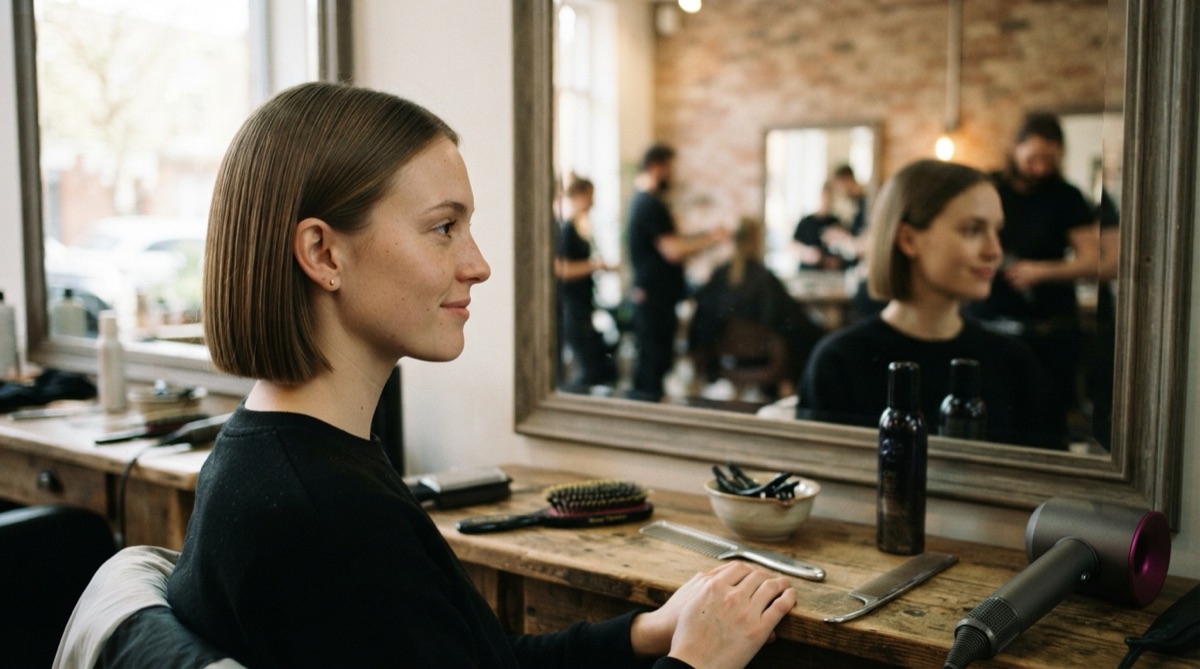
Fine and thin hair is not a limitation — it is a texture with its own set of cuts that work brilliantly and a few that fight it. The goal for fine hair is almost always the same: create the appearance of density. The right cut does that with clean lines and strategic weight; the wrong cut removes so much bulk that the hair looks wispy and sparse. Understanding the difference is what separates a haircut that makes your hair look fuller from one that makes it look thinner.
First, a quick clarification, because the two words get used interchangeably and shouldn't be. Fine describes the width of each individual strand (thin strands). Thin describes how many strands you have (low density). You can be fine and dense, thick and sparse, or any combination — and the best cut depends on which you actually are.
The Cuts That Work Best
These shapes are fine-hair favorites for a reason — they build the illusion of fullness instead of exposing sparseness:
- The blunt bob. A one-length cut with a clean, blunt edge is the single most reliable choice for fine hair. Because no weight is removed from the ends, the perimeter looks dense and the line looks strong. Chin- to collarbone-length is the sweet spot.
- The lob (long bob). A slightly longer blunt cut hitting around the collarbone, for those who want to keep length. Same principle as the bob — keep the ends blunt, not feathered.
- The textured pixie. Short cuts naturally look fuller because there is less length weighing hair down at the roots. A pixie with a bit of length and texture on top creates volume and movement that fine hair struggles to hold at longer lengths.
- Long layers, used sparingly. Long, subtle layers concentrated toward the ends can add movement — but only a few, kept low. Heavy or high layering is the enemy here.
- A blunt fringe or curtain bangs. Bangs add a block of visual density at the front and draw the eye, which reads as fuller hair overall.
What to Avoid
Just as important as the right cut is steering clear of the choices that make fine hair look thinner:
- Heavy, high layers. Layering that starts near the crown removes the very weight fine hair needs to look full, leaving stringy, see-through ends. This is the most common fine-hair mistake.
- Very long lengths. Past the collarbone, fine hair tends to lose volume — gravity pulls it flat and the ends taper to a wispy point. If you love length, a blunt lob is usually the longest that stays looking full.
- Aggressive thinning shears. Thinning out fine hair removes density you cannot spare and creates flyaways. If a stylist reaches for thinning shears on fine hair, ask why first.
- Razored ends. Razor cutting feathers the ends to a fine point — flattering on thick hair, thinning-looking on fine hair. Ask for a clean scissor cut instead.
When you book, this is worth saying out loud. A clear instruction like "I have fine hair and want to keep the ends blunt — please don't add heavy layers or use thinning shears" prevents the most common disappointment. Our guide to talking to your hairdresser covers how to phrase these constraints so you and your stylist picture the same result.
How Styling and Color Amplify the Cut
The cut does the heavy lifting, but two other levers add fullness on top of it. First, styling: blow-drying with a round brush to lift the roots, mousse or a volumizing spray at the base, and drying hair upside down all build volume fine hair cannot hold on its own. Second, color: dimensional color — subtle highlights and lowlights rather than a single flat shade — creates the illusion of depth and layers of strands, which reads as more density. A solid block of one color, by contrast, can make fine hair look flatter.
See It on Your Own Hair First
Fine hair looks dramatically different in a blunt bob versus a pixie versus a layered lob, and it is genuinely hard to imagine which suits your face until you see it. This is where a virtual try-on earns its keep: HairLens lets you upload one photo and preview these fine-hair-friendly cuts — bob, lob, pixie, curtain bangs — on your own face, then compare them side by side. You can also test dimensional color options to see which adds the most apparent fullness against your skin tone. The app gives personalized AI hair advice for your hair type as well, so you get input tuned to fine or thin hair specifically. Your photo is only used to generate the preview and then discarded, never stored or sold. If you are weighing whether to go shorter at all, our short vs long hair guide pairs naturally with this one.
FAQ
Is short or long hair better for thin hair?
Shorter generally reads fuller, because there is less length for gravity to flatten and the ends stay dense rather than tapering. That said, a blunt lob at the collarbone keeps length while still looking full. Past the collarbone is where fine hair most often starts to look sparse and stringy.
Do layers make fine hair look thinner?
Heavy or high layers do — they remove the weight fine hair needs and expose see-through ends. A few subtle, long layers near the ends can add gentle movement without that cost. The safest default for fine hair is a blunt, one-length cut, adding only minimal layering if you want some movement.
What is the best way to make fine hair look fuller without cutting it?
Combine volumizing styling (root-lifting blow-dry, mousse at the base, drying upside down) with dimensional color that creates the illusion of depth. Together they add noticeable fullness. But the cut sets the ceiling — no styling fully compensates for a shape that removed too much weight, which is why the cut matters most.
Try on new hairstyles and get AI hair & skin advice.
HairLens — See new hairstyles and colors on yourself from a single photo, and get personalized AI advice for your hair and skin.
Download HairLensfree on the App StoreKeep reading
Best Haircuts for a Round Face (Women and Men)
The best haircuts for a round face add height or length and break up the cheeks. Specific cuts for women and men, mistakes to avoid, and how to test them.
Haircuts for a Receding Hairline That Actually Help
The best haircuts for a receding hairline: textured crop, French crop, buzz cut and more, matched to how far it has receded, plus what to avoid.

Korean Hairstyles: How to Pick One for Your Face Shape
Korean hairstyles for men and women, from the two-block cut and Korean perm to the hush cut and hime cut, matched to face shape and hair texture.