How Often Should You Get a Haircut? A Straight Answer by Style
How often should you get a haircut? Real timelines by hair length, style, and goal — from pixies every few weeks to growing-out hair every few months.
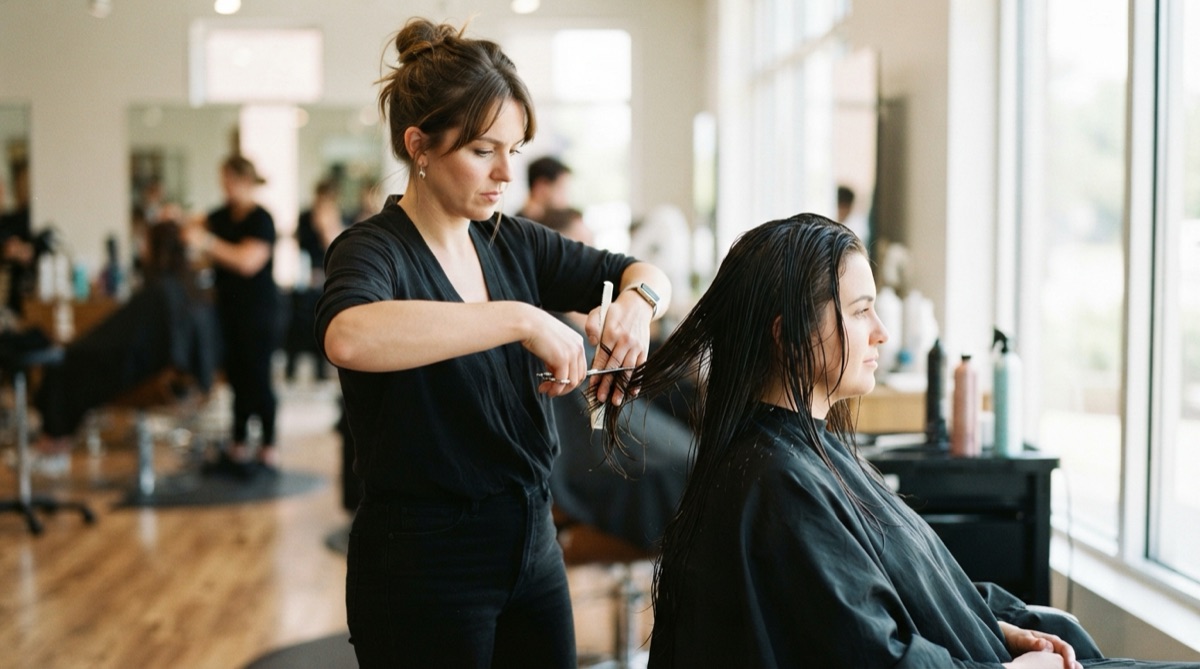
How often you should get a haircut depends far less on a universal rule and far more on your specific style and goal — but here is the straight answer most people want up front: short, structured cuts need trimming every three to six weeks, mid-length styles every six to ten weeks, and long hair every eight to twelve weeks, while hair you are actively growing out can stretch to twelve to sixteen weeks. The old "every six weeks" advice is a rough average that happens to fit almost nobody exactly.
The reason the interval varies so much is that a trim serves two different purposes: maintaining a shape, and maintaining health. A precise short cut loses its shape quickly, so it needs frequent trims for the look. Long hair holds its shape for months, so its trims are about ends, not silhouette. Figure out which job your trim is doing, and the right frequency becomes obvious.
Timelines by Style and Goal
Find the row that matches what you have — or what you want:
- Pixie and short tapered cuts: every 3 to 5 weeks. These cuts live and die by their shape. Even a couple of weeks of growth blurs the outline and grows out the neckline and around the ears. If you want a pixie to always look intentional, this is the commitment.
- Bobs and lobs: every 6 to 8 weeks. The blunt line that makes a bob look sharp softens as it grows unevenly. A trim resets the perimeter and keeps the shape crisp.
- Mid-length and layered styles: every 8 to 10 weeks. Layers lose their intended proportion as they grow, but not as fast as a short cut's outline, so you get a bit more runway.
- Long hair (maintaining): every 8 to 12 weeks. A dusting of the ends every couple of months keeps split ends from traveling up and keeps the hair looking healthy rather than stringy at the tips.
- Growing hair out: every 12 to 16 weeks. You still need occasional trims to remove splits — neglecting them entirely backfires — but you take off less, less often, to net positive length.
The Signs You Need a Trim (Regardless of the Calendar)
Timelines are guidelines; your hair gives you the real signal. Book a trim when you notice any of these, even if it is early:
- Split ends you can see. Frayed, splitting tips will only climb higher up the shaft if left, eventually forcing you to cut off more than a timely trim would have.
- Ends that tangle and snag. Damaged ends catch on each other; if detangling has gotten noticeably harder, the ends are ready to go.
- The shape looks "off." If your cut no longer falls the way it did fresh from the salon — the bob line has gone shaggy, the layers have flattened — the shape has grown out.
- Styling takes longer. When it suddenly takes more effort to get the same result, overgrown, damaged ends are usually the reason.
Does Trimming Make Hair Grow Faster?
No — and it is worth being clear about this, because it is one of the most persistent hair myths. Hair grows from the follicle at the scalp, at roughly 1.25 centimeters (half an inch) per month, and cutting the ends has zero effect on that rate. What regular trims actually do is prevent split ends from traveling up the shaft and forcing a bigger cut later. So trims help you retain length by keeping the ends healthy, which makes hair look like it is growing better — but they do not speed growth itself. If you are growing your hair out, the winning strategy is minimal trims often enough to stop splits, not avoiding scissors entirely.
Before a Big Change, Preview It
If your next appointment is not just a trim but a real change — going shorter, adding a fringe, switching up the shape — it is worth seeing it on yourself before you sit in the chair. HairLens lets you preview a new cut on your own photo, so you know whether you actually want the change before you commit to growing it back out if you don't. It is a lot cheaper than a haircut you regret for the next several months. Once you have a preview you love, bring it to the salon as your brief — our guide to talking to your hairdresser explains why a photo of the style on your own face beats any celebrity reference.
FAQ
How often should I trim my hair if I am growing it out?
Every 12 to 16 weeks, taking off only a small amount — just enough to remove split ends. Skipping trims entirely lets splits travel up the shaft, which eventually forces a bigger cut and costs you more length than the occasional dusting would have. Minimal but regular is the growing-out sweet spot.
Is it bad to go six months without a haircut?
For long hair in good condition, occasionally stretching to six months is not a disaster, though you will likely see split ends and thinner-looking tips by then. For short, structured cuts, six months means the style is entirely grown out. The healthier habit is a light trim before damage accumulates rather than a big rescue cut later.
Does cutting hair make it grow faster or thicker?
No. Growth rate and strand thickness are set at the follicle and are not influenced by trimming the ends. Trims keep the ends healthy so hair retains length and looks fuller at the tips, but they do not change how fast or how thick hair grows from the scalp.
Try on new hairstyles and get AI hair & skin advice.
HairLens — See new hairstyles and colors on yourself from a single photo, and get personalized AI advice for your hair and skin.
Download HairLensfree on the App StoreKeep reading

Best Haircuts for a Round Face (Women and Men)
The best haircuts for a round face add height or length and break up the cheeks. Specific cuts for women and men, mistakes to avoid, and how to test them.

Haircuts for a Receding Hairline That Actually Help
The best haircuts for a receding hairline: textured crop, French crop, buzz cut and more, matched to how far it has receded, plus what to avoid.

Korean Hairstyles: How to Pick One for Your Face Shape
Korean hairstyles for men and women, from the two-block cut and Korean perm to the hush cut and hime cut, matched to face shape and hair texture.