The Simplest Bedtime Routine for Toddlers That Actually Works
A no-drama bedtime routine for toddlers: the right sequence, how long each step should take, and why consistency beats perfection every single night.
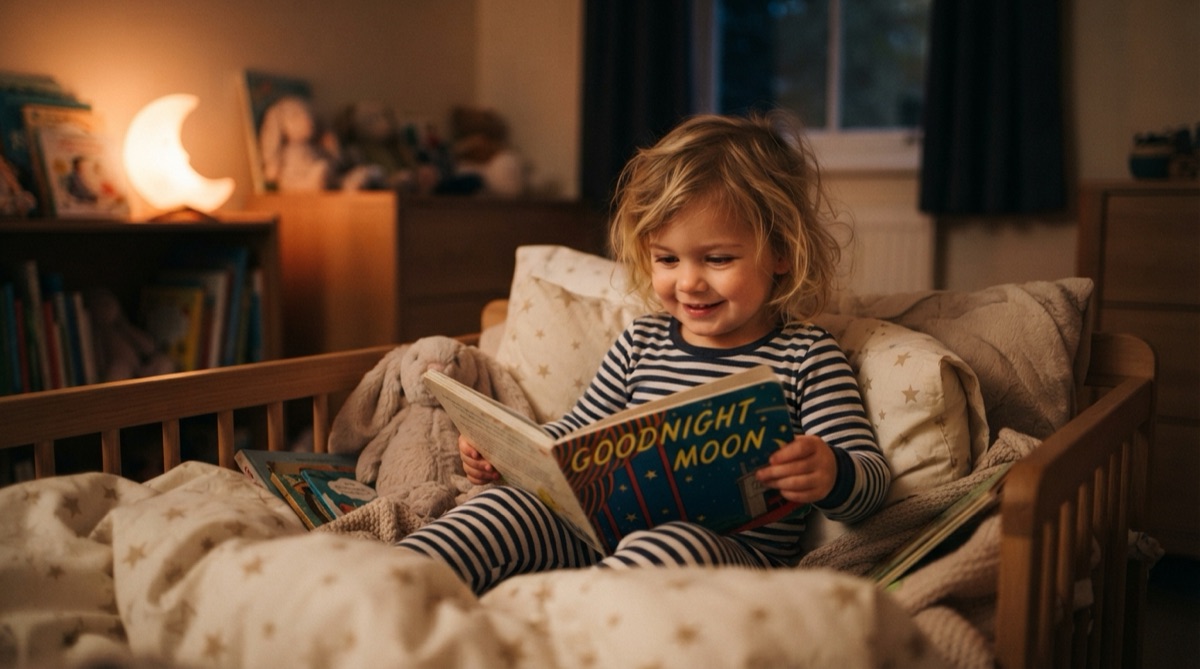
A toddler bedtime routine does not need to be elaborate. It needs to be consistent. The same four or five steps, in the same order, at the same time — repeated enough nights that the sequence itself becomes a signal the body learns to read as "sleep is coming." That is the entire mechanism, and it works because toddlers are pattern-recognition machines who use predictable sequences to feel safe.
The challenge is not finding the right routine. It is sticking to a routine on the nights when you are tired, running late, or have skipped nap and everything has gone sideways. Here is a realistic routine that holds up on hard evenings, not just easy ones.
The Four-Step Core Routine
Build around these four steps. The exact activities within each can vary — the sequence should not.
Step 1: Wind-Down Bath or Wash (~10 minutes)
A warm bath is the classic first step because it does something biological: the body's temperature rises in warm water and drops sharply when you get out, and that drop is a physiological signal for sleep. Even a quick wash works if bath is not feasible every night — the value is partly warmth, partly transition. It marks the end of active daytime and the start of the sleep sequence in a way a child can feel.
Step 2: Pajamas and Teeth (~5 minutes)
Keep this step functional and low-key. Let your toddler pick which pajamas if they have a strong preference — small choices within the routine reduce resistance without derailing it. The goal is to move through this step calmly, not to rush or negotiate. Already-dressed and already-brushed is the goal; the mode is quiet and slow.
Step 3: Story (~10–15 minutes)
This is the step that earns the routine. A story with a parent's full attention, lights dim, voices quieter than the previous steps, ends in a safe and sleepy place. Personalized stories that star your child work especially well for toddlers — they are already primed to hear their own name, and a hero who shares their name and ends the adventure safely asleep sends a direct message. GooDream generates a fresh, soothing personalized story in seconds, so the "I can't think of anything" failure mode disappears. Save favorites to the library so the nightly "that one again!" is always possible.
If you want premade premises to improvise from, we have ten bedtime story ideas here.
Step 4: The Goodnight Script (~3 minutes)
The same short sequence at the very end: a specific number of hugs, a particular phrase ("sleep tight, see you in the morning"), lights off. This micro-ritual inside the macro-routine is often what actually triggers sleep — toddlers can recite the steps back to you after a few weeks, which means the signal has fully landed.
How Long Should Bedtime Take?
Target 30 to 40 minutes from start to sleep. Under 20 feels rushed and often backfires with more bedtime requests. Over an hour is too long and usually means the routine has room for negotiation that it shouldn't. A 35-minute routine that runs the same every night is more powerful than an elaborate one that varies.
Handling the Stall Tactics
Toddlers are gifted negotiators. The "one more story," "I'm thirsty," and "I need to tell you something" requests are almost universal. Handle them without derailing the routine:
- Pre-empt "one more story" by announcing the number upfront. "We are reading two stories tonight" closes the negotiation before it starts.
- Put water by the bed. The thirst request disappears when the water is already there.
- The last thing you say is the same every night. "Sleep tight, see you in the morning" is a closed door in language. Long conversations started after lights-out should be met with a hug and the closing phrase repeated.
What to Do When the Routine Breaks Down
Travel, illness, holidays, and late nights all disrupt routines. The toddler who slept beautifully for three weeks can need two or three nights to resettle after a break. The fix is simply to resume the routine exactly — not to invent a new one, not to stay extra long, not to vary the steps. The signal is the sequence. Repeat it faithfully and it re-establishes faster than you expect.
FAQ
What time should a toddler's bedtime routine start?
Most toddlers (ages 1–3) do best with bedtime between 7 and 8 p.m. Start the routine 35 to 40 minutes before the target sleep time — so a 7:30 p.m. sleep means routine starts around 6:50 or 7 p.m. Adjust based on when your child naturally shows tiredness signs: eye-rubbing, clumsiness, or meltdowns usually mean overtired, so push the start earlier.
My toddler fights bedtime every night — is the routine the problem?
Usually not the routine itself — usually the sequence needs to start earlier (overtired toddlers fight harder), or the routine has too many decision points where the child can negotiate. Keep choices small and pre-defined, and start the routine before the overtired window hits.
Is a bath necessary every night for a bedtime routine?
No — the transition function matters more than the bath specifically. A warm wash, a face-and-hands rinse, or even changing into pajamas in the bathroom serves the same purpose. What the bath does well is provide a physical signal (the temperature drop) that sleep is approaching; if your child is calm and the routine is working without it, there is no need to force a nightly bath.
Personalized AI bedtime stories that lull little ones to sleep.
GooDream — GooDream writes a gentle, personalized bedtime story in seconds — starring your child's name and their favorite theme.
Download GooDreamfree on the App StoreKeep reading
Bedtime Stories About Kindness: 8 Ideas and How to Tell Them
Bedtime stories about kindness that actually land: 8 premises to tell tonight, how to show the lesson without preaching, and stories for hard situations.
Bedtime Stories for 5 Year Olds: Length, Themes and Ideas
Bedtime stories for 5 year olds: how long they should be, the themes that land at this age, 8 ideas built around school and friends, and a worked example.
Bilingual Bedtime Stories: Raising Kids in Two Languages
Bilingual bedtime stories that keep a home language alive: four approaches, what to do when kids answer in English, and how to keep new stories coming.