Bilingual Bedtime Stories: Raising Kids in Two Languages
Bilingual bedtime stories that keep a home language alive: four approaches, what to do when kids answer in English, and how to keep new stories coming.
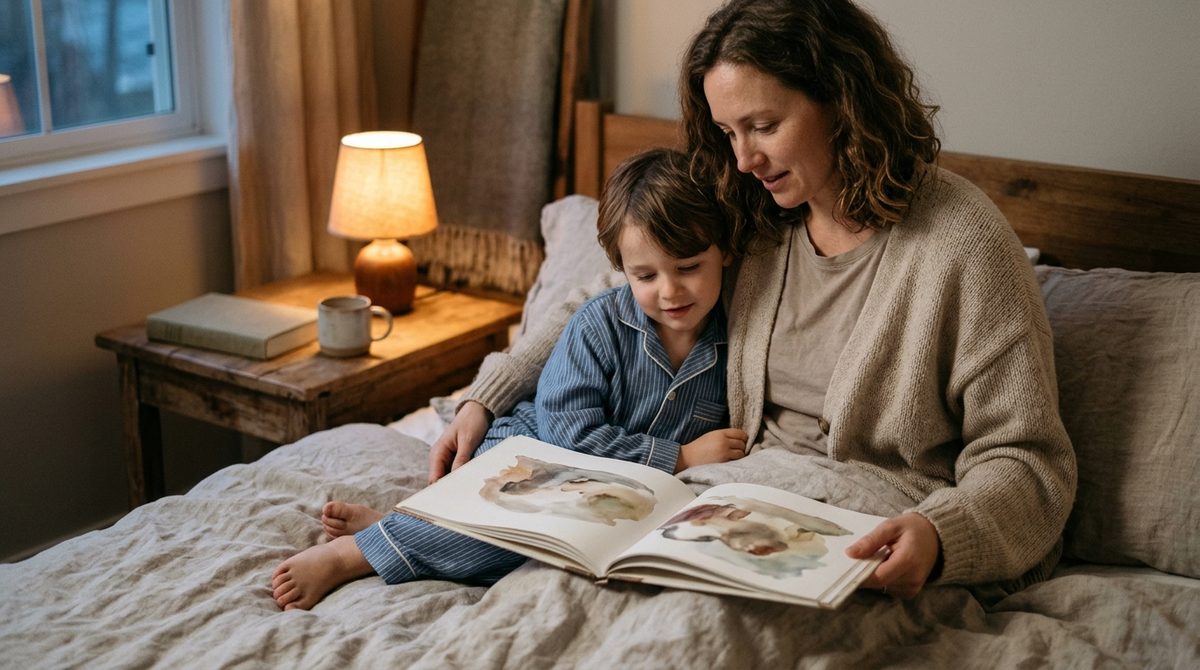
Bilingual bedtime stories work best when you keep bedtime as a reliable slot for the language your child hears less, read or tell the story in that language consistently, and let your child answer in whichever language they like. For many bilingual families, bedtime is the single most valuable ten minutes of minority-language exposure in the day: it's calm, one-to-one, and repeats every night.
The challenge is rarely motivation. It's supply. If your family speaks Vietnamese, Polish or Tagalog at home and lives somewhere English dominates, the bookshelf fills up with English books, and the minority-language stories run out after a few weeks of nightly use.
This guide covers why bedtime matters so much for a second language, the main approaches families use, what to do when your child answers in the "wrong" language, a worked example from a Vietnamese-English household, and how to keep the stories coming.
Why bedtime is the best slot for the minority language
Children in bilingual homes often get plenty of the majority language from school, friends and screens. The home language has to compete for time. Bedtime gives it a protected slot for a few reasons:
- It's predictable. A routine that happens every night adds up in a way that occasional effort doesn't.
- It's one-to-one. Your child is listening to you, not to a classroom or a group of friends.
- Stories carry richer language than daily talk. "Put your shoes on" and "dinner's ready" use a small vocabulary. Stories bring in feelings, descriptions, and words for things you'd never mention at breakfast.
- It's emotionally warm. Children tend to feel attached to a language they associate with closeness, which helps when they reach the age of wanting to use only the majority language.
Four approaches families use for bilingual bedtime stories
There's no single right method. These are the common ones, and many families mix them.
1. One parent, one language
Each parent tells stories only in their own language. It's simple to keep track of and gives the child a clear association. The downside is that if the minority-language parent does fewer bedtimes, exposure drops.
2. Minority language at bedtime, always
Whoever does bedtime, the story is in the home language. This works well when both parents can read it, and it protects that slot even when the rest of the day drifts toward the majority language.
3. Alternate nights
Monday in English, Tuesday in Vietnamese, and so on. Fair and easy to explain to an older child, but it halves the minority-language time, so it suits families where both languages are already fairly balanced.
4. The same story twice
Tell a story once in the language your child knows better, then the same story in the other language. Because they already know the plot, they can focus on the words. This is especially useful for children who understand the home language but are shy about it.
When your child answers in the "wrong" language
Almost every bilingual parent hits this: you tell a story in Vietnamese, and your child asks questions in English. It's normal, and it's not a sign the approach is failing. Children often understand far more of a language than they're ready to speak.

- Don't refuse to respond. At bedtime especially, insisting on the minority language can turn a warm moment into a standoff.
- Recast instead. Answer in the minority language, naturally using the words they just said in English. They hear the phrase they needed without being corrected.
- Keep the story itself consistent. The narration stays in one language even if the conversation around it wanders.
- Play the long game. Receptive language often comes first. A child who listens to stories in a language for years has a foundation to build on later, even if they mostly answer in the other one now.
A worked example: a Vietnamese-English family
Linh and her partner live in Australia. Linh speaks Vietnamese to their daughter, Mai, who is four; her partner speaks English. Mai goes to an English-speaking preschool and is starting to answer Linh in English. Linh wants bedtime to be the Vietnamese anchor, but she's run out of Vietnamese picture books and doesn't always have the energy to improvise in the evening.
Here's how a week could look using GooDream, which writes stories in English or Vietnamese:
Linh's nights. She sets the story language to Tiếng Việt, enters Mai's name, sets the age to 4, picks a value such as Sharing (Mai has been grabbing toys at preschool), and adds "con mèo" (cats) as the favorite thing. The app writes an original Vietnamese story with Mai as the hero and a short lesson at the end. Linh reads it aloud herself, slowly. If Mai asks something in English, Linh answers in Vietnamese and carries on.
Her partner's nights. Same name, same value, same favorite thing, but with the language set to English. Mai hears the same idea of sharing from both parents, in both languages, which reinforces it without either parent having to translate.
The tired nights. On evenings when Linh's voice is gone, she taps play and the story is narrated in the language it was written in, with the words highlighted as they're read. She sets a sleep timer and stays beside Mai.
The favorites. Mai's favorite stories go into the family library, so she can hear them again on request. Repetition is where vocabulary sticks.
GooDream also includes a small collection of classic fairy tales with their own narration, which can be played in English or Vietnamese. For a bilingual child, hearing a familiar tale in the home language is a gentle way to stretch comprehension.
One honest limit: story generation in GooDream currently covers English and Vietnamese only. If your home language is something else, the approaches above still apply, and the simple formula for making up a bedtime story works in any language you speak.
Keeping the stories coming
Supply is what usually breaks a bilingual bedtime routine, so plan for it.
- Improvise in the home language. You don't need a book. A hero, a small problem, a cozy ending. Improvised stories also use the words your family actually says.
- Translate on the fly. Read an English picture book but tell it in the home language, looking at the pictures. Many parents find this easier than reading a translation.
- Ask relatives. Grandparents can record or tell stories over a video call, which adds a second voice in the home language.
- Generate when you're stuck. For English and Vietnamese, a personalized story generator fills the gaps on nights when you've used up every idea.
- Repeat favorites shamelessly. A story heard twenty times teaches more vocabulary than twenty stories heard once.
FAQ
Should bedtime stories be in the minority language?
For most bilingual families, yes. Children usually get plenty of the majority language from school and friends, so bedtime is a valuable, predictable slot for the language they hear less. If both languages are already balanced, alternating nights or telling the same story in both languages works too.
Will reading in two languages confuse my child?
Mixing languages is a normal part of growing up bilingual, and children sort them out over time. Keeping each story in one language, and being consistent about who uses which language, makes the patterns easier to pick up. Answering in the "wrong" language is common and usually temporary.
Can I get personalized bedtime stories in Vietnamese?
Yes. GooDream writes personalized bedtime stories in English or Vietnamese. You enter your child's name, age, a value like kindness or courage and a favorite thing, choose the language, and the app writes an original story you can read aloud or have narrated.
What if my child refuses stories in the home language?
Don't force it at bedtime, where it can sour the routine. Try telling the same story first in the language they prefer and then in the home language, use their favorite characters, or let a grandparent tell it. Keep the home language warm and low-pressure rather than a rule.
Personalized AI bedtime stories that lull little ones to sleep.
GooDream — GooDream writes a gentle, personalized bedtime story in seconds — starring your child's name and their favorite theme.
Download GooDreamfree on the App StoreKeep reading
Bedtime Stories About Kindness: 8 Ideas and How to Tell Them
Bedtime stories about kindness that actually land: 8 premises to tell tonight, how to show the lesson without preaching, and stories for hard situations.
Bedtime Stories for 5 Year Olds: Length, Themes and Ideas
Bedtime stories for 5 year olds: how long they should be, the themes that land at this age, 8 ideas built around school and friends, and a worked example.
How to Read a Bedtime Story Aloud So It Calms Kids Down
How to read bedtime stories aloud so kids wind down: pace, volume and pauses, a step-by-step routine, and what to do on nights you have no voice left.