The Real Benefits of Reading to Your Child (Beyond the Bedtime)
The benefits of reading to your child go past sleep: vocabulary, focus, empathy, and bonding. Here's what the daily habit builds, and how to keep it going.
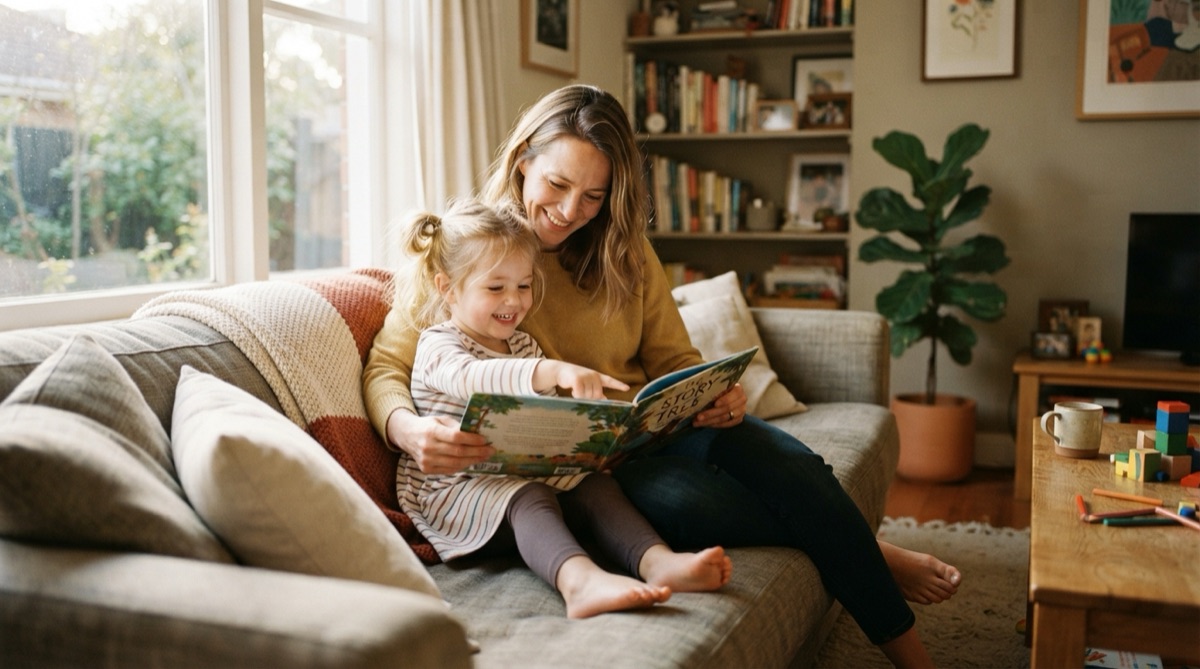
Reading to your child is one of those parenting habits that everyone recommends and few people fully explain. Yes, it helps at bedtime — but the reasons to read aloud go far beyond sleep, and most of them compound quietly over years rather than showing up overnight. The daily ten minutes builds language, attention, empathy, and closeness in ways that are hard to replicate any other way.
None of it requires you to be a great performer or to read anything fancy. The benefits come from the simple act of a familiar voice sharing words and a story with a child who has your full attention. Here's what that everyday habit is actually building.
Language and vocabulary, in context
Read-aloud time is one of the richest sources of language a young child gets. Books and told stories use words, phrases, and sentence shapes that rarely surface in everyday chat — "the meadow was silver with moonlight," "she hesitated," "the lighthouse glowed." Children absorb vocabulary by hearing words used in context, night after night, long before they can read those words themselves.
This exposure is strongly linked to later reading ability and school readiness, but you don't need to turn it into a lesson. No quizzing, no pointing at every word. Just reading and telling stories does the work — the vocabulary comes along for free, wrapped inside a story your child actually wants to hear.
Attention, focus, and imagination
Following a story — even a short one — asks a child to hold characters, a setting, and a small problem in mind and track them over several minutes. That's real practice for the kind of sustained attention that screens, with their constant cuts and rewards, don't build. A story sets its own gentle pace, and the child's imagination fills in the pictures.
That imaginative work matters. When you read "a warm bakery at the edge of a sleepy village," your child builds that bakery themselves — the smell, the light, the shapes. Doing that regularly strengthens the mental muscles behind creativity and comprehension, and it's a big part of why a told story winds a child down where a video winds them up. (More on that contrast in our piece on why bedtime stories help kids sleep.)
Empathy and understanding feelings
Stories let children safely try on experiences and emotions that aren't their own. A hero who feels scared and then finds courage, a character who is sad until a friend helps — these give a child language and models for their own feelings. "The little fox was nervous, but he took a deep breath" is a gentle rehearsal for real-life bravery.
This gets even more powerful when the hero shares your child's name. Hearing "brave Amara took a deep breath and kept going" lets a child step directly into the feeling and the resolution. It's one reason personalized stories land so well — the child isn't just following the hero, they are the hero, practicing kindness and courage from the inside.
Bonding, security, and a calm end to the day
Perhaps the most underrated benefit is the simplest: reading together is dedicated, physically close, undivided attention. In a busy day full of half-attention and competing demands, ten minutes of a parent's full focus is a genuine gift, and children feel it. That closeness builds security, and a child who ends the day feeling connected settles far more easily into a dark room afterward.
This is why the habit is worth protecting even when life is hectic. A short story still delivers the bond, the language, and the calm. If improvising or finding the energy for it is the hard part, GooDream can write a gentle, personalized story starring your child in seconds so the words are ready and you can focus on the reading and the cuddle — it's ad-free, has no tracking, keeps content age-appropriate, and uses the details you type only to write that one story. The tool produces the story; you provide the voice, which is the part that actually builds all of the above.
How to keep the habit going
- Make it daily and predictable. Same rough time, same spot. The consistency is what turns reading from a nice idea into a habit that compounds.
- Let repetition happen. Rereading a favorite for the tenth time is comforting and deepens language, not boring for a young child. Follow their lead.
- Read past the age they can read themselves. Being read to stays valuable well into the school years — independent readers still love and benefit from it.
- Keep it low-pressure. A tired three-minute story counts. The goal is the habit and the closeness, not a perfect performance.
FAQ
What are the main benefits of reading to your child?
Richer vocabulary and language skills, stronger attention and imagination, greater empathy from experiencing characters' feelings, and a real boost to bonding and security from focused time together — plus, at night, an effective wind-down toward sleep.
At what age should I start reading to my child?
You can start in infancy. Babies benefit from your voice, the rhythm of the words, and the closeness long before they follow any plot, and there's no age at which children outgrow being read to — even confident independent readers still enjoy and gain from it.
How long do I need to read each day to see benefits?
Even ten to fifteen minutes a day makes a meaningful difference, especially when it's consistent. A short daily habit compounds far more than an occasional long session, so a brief story every day beats a marathon read once a week.
Personalized AI bedtime stories that lull little ones to sleep.
GooDream — GooDream writes a gentle, personalized bedtime story in seconds — starring your child's name and their favorite theme.
Download GooDreamfree on the App StoreKeep reading
Bedtime Stories About Kindness: 8 Ideas and How to Tell Them
Bedtime stories about kindness that actually land: 8 premises to tell tonight, how to show the lesson without preaching, and stories for hard situations.
Bedtime Stories for 5 Year Olds: Length, Themes and Ideas
Bedtime stories for 5 year olds: how long they should be, the themes that land at this age, 8 ideas built around school and friends, and a worked example.
Bilingual Bedtime Stories: Raising Kids in Two Languages
Bilingual bedtime stories that keep a home language alive: four approaches, what to do when kids answer in English, and how to keep new stories coming.