Short Bedtime Stories for Kids: Why Shorter Often Works Better
Short bedtime stories for kids can settle children faster than long ones. Why shorter wins at bedtime, plus ready-to-tell mini-stories and a quick formula.
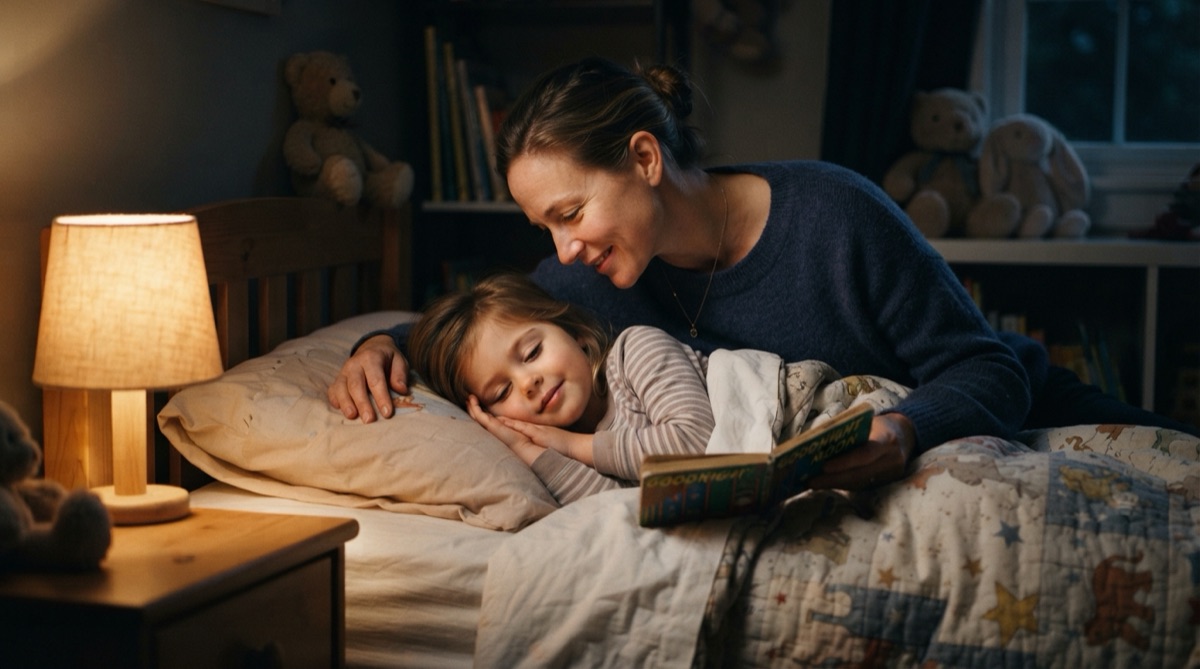
When bedtime is running late and everyone is tired, a long story can feel like the last thing anyone has energy for — and here's the reassuring truth: it's often the wrong choice anyway. A short bedtime story, told calmly, tends to settle a child better than a long one, because the whole point of storytime is the wind-down, and a short story gets you to the calm ending sooner.
Short does not mean rushed or low-effort. A three-minute story with a cozy hero and a soft landing does everything a bedtime story needs to do. Here's why shorter often wins, plus some mini-stories you can tell tonight and a formula for making your own on the spot.
Why short bedtime stories work
The value of a bedtime story is not the length of the plot — it's the signal it sends: the day is ending, it's safe to power down. A short story delivers that signal cleanly and reaches the quiet ending before an already-tired child gets a second wind or a long tale accidentally revs their imagination back up.
Short stories also protect the routine on hard nights. The evenings when you're exhausted, running late, or coping with a cranky kid are exactly when a long story feels impossible — so those are the nights people skip storytime entirely. A reliable three-minute story means you never have to skip it. Consistency matters far more than length, and a short story every single night beats a long one only when you have the energy.
Five short stories you can tell tonight
Each of these is a two-to-four-minute premise. Use your child's name for the hero and end each one slow and soft.
- The sleepy little cloud. A small cloud has been drifting all day and is finally ready to rest. Your child helps it find the softest patch of sky, and they both settle in as the moon comes up.
- The lost pebble. A penguin has misplaced his favorite smooth pebble. Your child looks carefully, finds it tucked under a snowy leaf, and the penguin curls up happy and tired.
- Goodnight to the garden. One by one, your child says goodnight to each thing in a night garden — the flowers folding up, the bees back in the hive, the pond going still.
- The tiny boat. A little boat drifts slowly down a calm river past sleeping ducks and glowing fireflies, all the way home to its cozy dock.
- The star who needed a lullaby. A small star can't quite fall asleep, so your child hums it the softest song, and the star's light gently dims as it drifts off.
A quick formula for your own short stories
When you can't recall a premise, this three-beat shape gives you a complete short story in about three minutes:
- Hero and cozy place. One sentence: your child (by name) somewhere gentle and safe — a warm burrow, a quiet meadow, a little boat.
- One tiny, gentle problem. Something small and un-scary: a lost toy, a friend who can't sleep, a light that needs switching off.
- A soft solution and a sleepy ending. The problem resolves in a sentence or two through kindness or patience, then everyone gets cozy and drifts off. Slow your voice right down for the last few lines.
Some nights even that feels like too much to invent. That's normal — it's just Tuesday. GooDream writes a short, calming, personalized story around your child's name and a theme they love in seconds, deliberately paced to wind down with a safe ending and no cliffhangers, and you can save the good ones to a library for the inevitable "that one again!" It's ad-free with no tracking, and the details you type are used only to write the story. If you'd rather improvise, we also have ten longer story ideas here that trim easily into short versions.
The one rule short stories still follow
Short or long, the ending must wind down. The advantage of a short story is that you reach that ending sooner and with more energy to deliver it softly. Whatever the middle held, spend the final thirty seconds slowing your voice, shortening your sentences, and bringing the hero somewhere safe and sleepy. That last quiet impression is what a bedtime story is really for.
FAQ
How short can a bedtime story be?
As short as two to three minutes and still fully effective. A brief story with a likable hero and a slow, calm ending does everything bedtime needs; length matters far less than reaching a soft landing while your child is winding down rather than gearing back up.
Is a short story every night better than a long one sometimes?
Yes. Consistency is what trains a child's body to expect sleep, so a reliable short story every night beats an occasional long one. Short stories are easy to keep up even on tired, late, or hectic evenings — which are exactly the nights the routine matters most.
My child wants more when the story is short — what do I do?
Tell a second short story rather than extending into one long one. Two short stories give you two calm endings, and announcing the number up front ("two tonight") turns "one more" from a negotiation into a settled part of the routine.
Personalized AI bedtime stories that lull little ones to sleep.
GooDream — GooDream writes a gentle, personalized bedtime story in seconds — starring your child's name and their favorite theme.
Download GooDreamfree on the App StoreKeep reading
Bedtime Stories About Kindness: 8 Ideas and How to Tell Them
Bedtime stories about kindness that actually land: 8 premises to tell tonight, how to show the lesson without preaching, and stories for hard situations.
Bedtime Stories for 5 Year Olds: Length, Themes and Ideas
Bedtime stories for 5 year olds: how long they should be, the themes that land at this age, 8 ideas built around school and friends, and a worked example.
Bilingual Bedtime Stories: Raising Kids in Two Languages
Bilingual bedtime stories that keep a home language alive: four approaches, what to do when kids answer in English, and how to keep new stories coming.