How to Teach Kids Values Through Bedtime Stories
How to teach kids values through bedtime stories: one value, one real choice, one closing sentence. A method, 10 values explained, and a worked week.
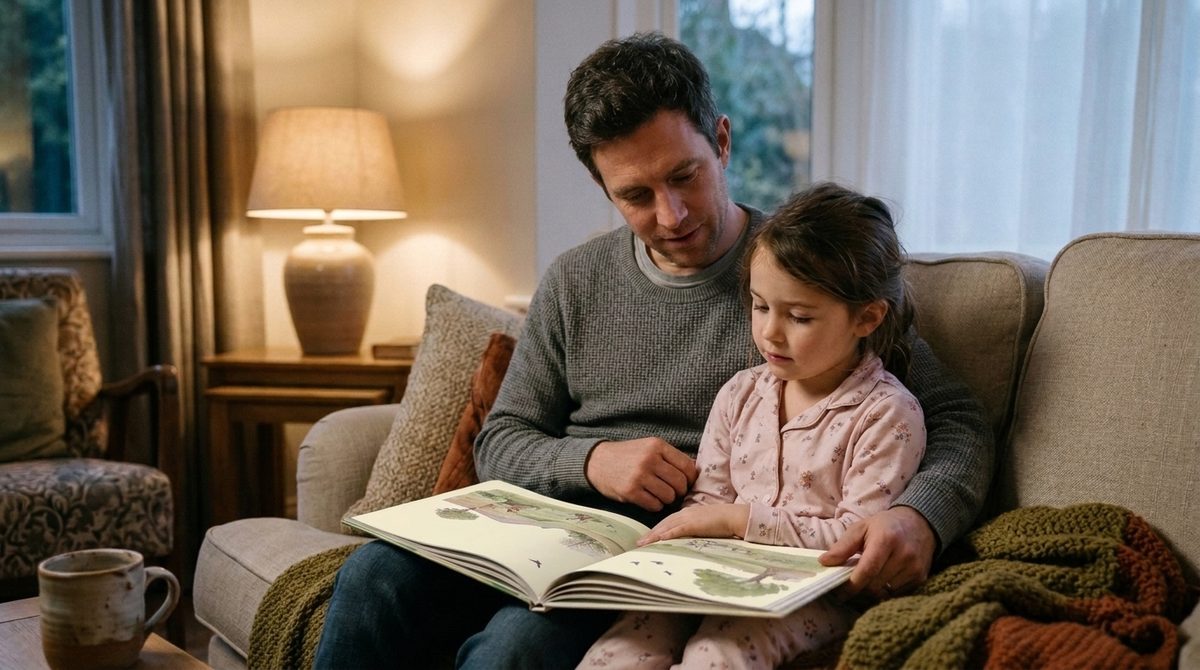
The most reliable way to teach kids values through bedtime stories is to pick one value at a time, give the hero a real moment where that value is hard, let them choose it anyway, and close with a single sentence that names the lesson. Children learn values from watching someone they identify with make a choice, not from being told what the right choice is. A bedtime story gives you that someone every single night.
Bedtime is a good slot for this for practical reasons too. Your child is still, close to you, and not defending themselves the way they might be after an argument at dinner. A value that would sound like a lecture at 5 p.m. sounds like a story at 8 p.m.
This guide walks through the method step by step, what a story for each of ten common values looks like, a worked week of stories, and the mistakes that turn a moral story into a sermon.
Why stories teach values better than rules
A rule tells a child what to do. A story shows them what it feels like to do it, and what happens next. That second part is what children actually carry into the next day.
There are three reasons this works so well at bedtime:
- Identification. When the hero has your child's name, or is a small animal with your child's worries, the child rehearses the choice from the inside. "Ava told the truth even though she was scared" is a memory they can borrow.
- Low stakes. In a story, nobody actually gets in trouble. Your child can watch a character feel the pull toward lying or grabbing, without any of the defensiveness they'd feel if you pointed at their own behavior.
- A shared reference. The next time the situation comes up in real life, you can say "remember the turtle who waited?" instead of starting a lecture from scratch.
The approach doesn't require you to be a great storyteller. It requires structure, which is what the next section gives you.
The method: one value, one choice, one sentence
1. Pick one value, and keep it for a few nights
One value per story, and ideally the same value for several nights in a row. Kindness on Monday, honesty on Tuesday, and courage on Wednesday blurs together. Three different honesty stories in a row gives your child three angles on the same idea.
2. Connect it to something that happened today
The strongest choice is the value your child struggled with that day. Grabbed a toy? Sharing. Melted down waiting for dinner? Patience. Don't mention the incident directly; just let the story sit near it. Children notice the connection on their own, and it lands softer that way.
3. Make the value cost something
Honesty is easy when nothing is at stake. In the story, the hero should have a reason to do the other thing: the vase is broken and nobody saw, the last cookie is right there, the dark hallway is scary. Without that pull, there's no choice, and without a choice, there's no lesson.
4. Resolve it through the choice, not luck
The ending should follow from what the hero decided. If the problem is solved because a fairy appears, the takeaway is "wait for a fairy." If it's solved because the hero told the truth and the grown-up helped fix the vase, the takeaway is the one you wanted.
5. Name the lesson in one sentence
Close with one quiet line: "Telling the truth felt scary for a moment, and then it felt like putting down something heavy." Then stop. No follow-up explanation, no "and that's why you should always..."
6. Talk for one minute, not ten
One question is enough: "Have you ever felt like the little bear?" If your child wants to talk, follow them. If they're yawning, let the lesson go to sleep with them.
What a story looks like for 10 common values
These are the values parents most often want to build, with the kind of moment that makes each one a real choice.

- Kindness — the hero gives up something small (a warm spot, a turn, their attention) for someone who needs it more.
- Courage — the hero does a scary thing in a small way: speaks up in class, walks down a dark path with a lantern. Courage is being scared and doing it anyway, not feeling no fear.
- Honesty — the hero could hide a mistake, tells the truth instead, and the grown-up's reaction is calm. That calm reaction matters; it's the part your child is testing.
- Sharing — the hero chooses how to share, which keeps the decision theirs.
- Patience — the hero has to wait for something (a seed to grow, a cake to bake, a turn on the swing) and finds something good to do while waiting.
- Gratitude — the hero notices the small things others did for them during the day, often at the end, which makes it a natural wind-down.
- Friendship — two characters disagree, then find a way to keep playing together.
- Perseverance — the hero tries, fails, and tries again, with each attempt a little better.
- Respect — the hero learns that someone does things differently (eats different food, speaks a different language, moves slowly) and makes room for it.
- Curiosity — the hero asks questions and discovers something quietly wonderful, like where the moon goes or why owls are awake at night.
Those ten happen to be exactly the values you can choose from in GooDream, which writes a short, calm story around whichever one you pick, with your child as the hero and a gentle lesson line at the end. It's a quick way to follow the method on nights when you have no plot left in you.
A worked example: one week of honesty
Here's what this looks like in practice. Ava is five. On Sunday she broke a cup and said her little brother did it. You handled it in the moment, and now you'd like to plant something deeper without bringing it up again.
Monday. A story where a rabbit knocks over a basket of berries and nobody sees. She thinks about hiding it, tells her mother instead, and they pick the berries up together. Lesson line: "Telling the truth is easier with someone beside you."
Tuesday. A story with Ava as the hero, who finds a shiny shell on the beach that belongs to another child. She gives it back. The other child shows her where to find more. Same value, a different angle: honesty about things, not just mistakes.
Wednesday. A story where a small bear says he's not scared of the storm, but he is. When he finally tells his dad the truth, his dad says he was a little scared too. Honesty about feelings.
Thursday. Ava asks for the berry story again. Read it again. Repetition is a feature, not a problem.
If you'd rather not invent each night, in GooDream you'd enter Ava's name, set the age to 5, choose Honesty, and add a favorite thing like "rabbits" or "the beach" to vary the setting. Save the one she likes to your family's story library so Thursday's repeat is one tap away.
By Friday, there's a decent chance Ava will tell you about a mistake without being asked. If she does, keep your reaction as calm as the parents in the stories. That's the real lesson.
Mistakes that turn a moral story into a sermon
- Mirroring your child as the villain. If the "bad" character obviously did exactly what your child did today, they'll feel accused. Make your child the hero who makes the good choice, not the one who makes the bad one.
- Harsh consequences. A character who lies and is punished severely teaches fear, not honesty. Keep consequences mild and repairable.
- Too many values at once. "Be kind and brave and honest and share" is not a lesson, it's a list.
- Exciting endings. A values story is still a bedtime story. Whatever the middle held, the ending should wind down, get quieter, and land somewhere safe. If your child is fighting sleep anyway, our guide to what to do when kids can't sleep covers the rest of the routine.
FAQ
At what age can you teach values through stories?
From about age two, simple stories can show one character helping or sharing with another. Between four and seven, children can follow a real choice and connect it to their own lives, which is when values stories work best. Older children still benefit, but they'll want more nuanced characters and less obvious lessons.
Should a bedtime story always have a moral?
No. Some nights the best story is just cozy and silly, and that's fine. A gentle lesson a few nights a week is plenty. When you do include one, keep it to a single sentence at the end so the story still feels like a story rather than a lesson dressed up.
What values should I teach first?
Start with whatever your child is actually struggling with this week, because that's when the story will feel relevant. For many toddlers that's sharing or patience; for school starters it's often courage or friendship. Kindness and honesty are good defaults when nothing specific is going on.
Do personalized stories teach values better?
They tend to hold attention better, because children listen more closely when the hero has their name. That attention makes the choice in the story feel like their own. GooDream builds this in: you give it your child's name, age and a value, and it writes a story where your child makes the good choice.
Personalized AI bedtime stories that lull little ones to sleep.
GooDream — GooDream writes a gentle, personalized bedtime story in seconds — starring your child's name and their favorite theme.
Download GooDreamfree on the App StoreKeep reading

Bedtime Stories About Kindness: 8 Ideas and How to Tell Them
Bedtime stories about kindness that actually land: 8 premises to tell tonight, how to show the lesson without preaching, and stories for hard situations.

Bedtime Stories for 5 Year Olds: Length, Themes and Ideas
Bedtime stories for 5 year olds: how long they should be, the themes that land at this age, 8 ideas built around school and friends, and a worked example.

Bilingual Bedtime Stories: Raising Kids in Two Languages
Bilingual bedtime stories that keep a home language alive: four approaches, what to do when kids answer in English, and how to keep new stories coming.