Bedtime Stories vs Screen Time at Night: What the Difference Is
Bedtime stories vs screen time at night: why one winds kids down and the other winds them up, plus how to use a phone as a story tool the healthy way.
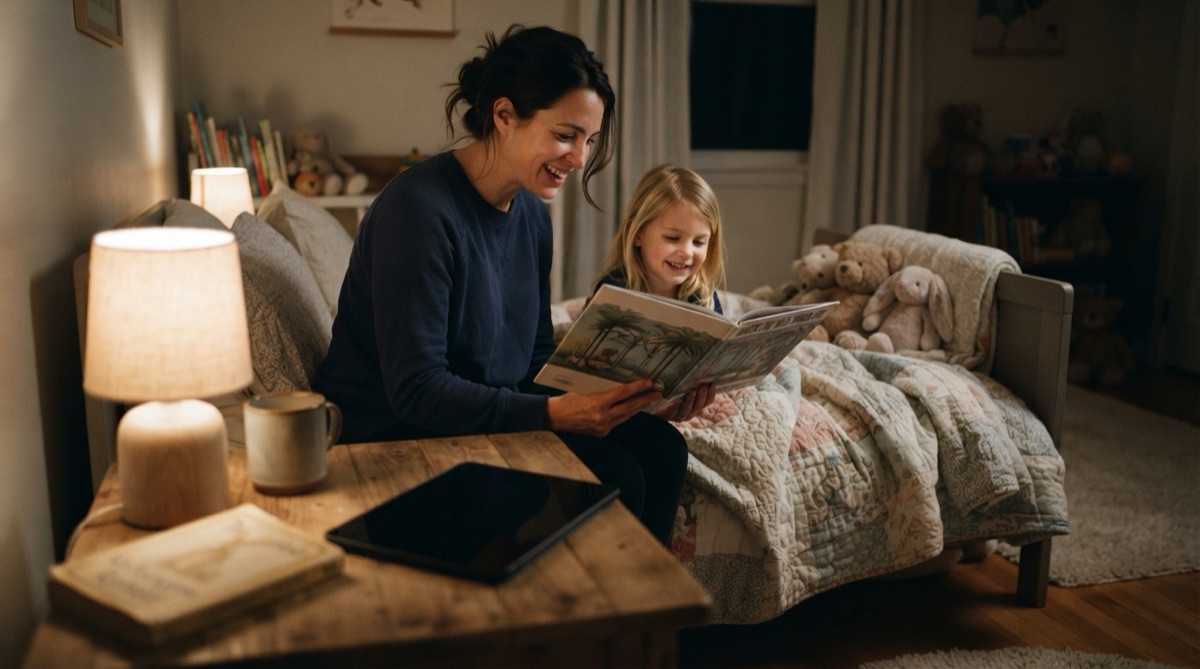
It's a familiar bedtime shortcut: hand over the tablet so a tired child stays put and quiet for a while. It feels like it should help everyone wind down. In practice, screens right before bed usually do the opposite — and a told or read story, which asks for far less effort than it seems, does the wind-down work a screen can't. Understanding why comes down to what each one actually does to a child's brain and body at night.
This isn't a lecture about banning screens. It's a practical look at why they're a poor fit for the last stretch before sleep specifically, and how to get the convenience of a phone at bedtime without the downside.
Why screens wind kids up before bed
Two things make screens a bad match for the pre-sleep window. First, the content: apps, games, and videos are engineered to hold attention with fast cuts, rewards, and novelty. That's stimulating by design — it keeps arousal high exactly when you want it dropping. A child who was gripped by a video twenty minutes ago isn't primed for sleep; they're primed for more.
Second, the light. Bright screens held close to the face are alerting and can interfere with the body's natural wind-down. Combine stimulating content with alerting light right before bed and you have a recipe for a child who is wired, not sleepy — which is why "just one more video" so often ends in a harder bedtime, not an easier one.
Why a story does the opposite
A bedtime story works because it moves in the other direction on every axis. It sets a slow, gentle pace instead of a fast one. It occupies the imagination fully but calmly, at whatever speed your voice chooses. There's no bright rectangle demanding attention — a child can listen with eyes closed or resting on you. And a good story is built to end soft, lowering the stakes and the volume toward sleep rather than spiking excitement.
On top of the calming effect, a story delivers what a screen can't: a parent's voice, physical closeness, and undivided attention. That connection is a big part of why children settle after storytime — they end the day feeling safe, which makes being left in a dark room much easier. A screen, however engaging, leaves a child alone with a device rather than connected to a person. (We go deeper on the mechanism in why bedtime stories help kids sleep.)
Using a phone as a story tool, not a screen
Here's the nuance people miss: the problem isn't the device itself, it's how it's used. A phone can be a genuinely useful bedtime tool as long as it produces the story rather than becoming the experience. The trick is to keep the screen in your hands and your voice as the delivery.
- Prepare before you sit down. Pull up or generate the story first, so bedtime isn't spent watching something load or scrolling.
- You read, they listen. Read from the phone the way you'd read from a book — screen dimmed and turned away from your child, their eyes on you or closed.
- Keep it calm content. A soothing story, not a video or a game. The medium matters less than whether it winds down or winds up.
- Put the device away at lights-out. The phone leaves with you. It was a tool; it doesn't stay in the bed.
This is exactly the model GooDream is built around: you enter your child's name and a theme and it writes a calm, personalized story in seconds — deliberately soothing, no cliffhangers, always a safe ending — so the phone produces the words and your voice delivers them. It's ad-free, has no tracking, keeps content age-appropriate, and uses the details you type only to write that one story. The device does the writing; you stay the storyteller.
The practical takeaway
You don't have to be perfect about screens to protect bedtime. Aim for a wind-down buffer of 30 to 45 minutes without stimulating screen time before sleep, and fill that space with the calm, connected ritual of a story. If a phone helps you produce that story, great — just keep it a tool in your hands rather than a screen in theirs. If cutting back on screens more broadly is the goal, our sister app's guide on how to reduce screen time has practical steps. Either way, the last thing before sleep should be a quiet voice and a safe story, not a glowing screen.
FAQ
Is it bad to let kids watch screens right before bed?
Screens in the last stretch before sleep tend to work against bedtime, because the content is stimulating by design and the bright light is alerting — a combination that keeps a child wired when you want them winding down. A calm buffer without stimulating screens before bed helps them settle.
Are bedtime stories better than screen time for sleep?
For the pre-sleep window, yes. A story sets a slow pace, engages the imagination calmly, ends soft, and adds a parent's voice and closeness — all of which wind a child down and build the security that eases sleep, whereas stimulating screen content and light tend to do the opposite.
Can I use a phone to tell bedtime stories without the downsides?
Yes, if you keep it a tool rather than the experience: prepare or generate a calm story in advance, then read it aloud yourself with the screen dimmed and turned away, and put the phone away at lights-out. Your voice and closeness do the settling; the phone just supplies the words.
Personalized AI bedtime stories that lull little ones to sleep.
GooDream — GooDream writes a gentle, personalized bedtime story in seconds — starring your child's name and their favorite theme.
Download GooDreamfree on the App StoreKeep reading
Bedtime Stories About Kindness: 8 Ideas and How to Tell Them
Bedtime stories about kindness that actually land: 8 premises to tell tonight, how to show the lesson without preaching, and stories for hard situations.
Bedtime Stories for 5 Year Olds: Length, Themes and Ideas
Bedtime stories for 5 year olds: how long they should be, the themes that land at this age, 8 ideas built around school and friends, and a worked example.
Bilingual Bedtime Stories: Raising Kids in Two Languages
Bilingual bedtime stories that keep a home language alive: four approaches, what to do when kids answer in English, and how to keep new stories coming.