High-Protein Meals That Are Actually Easy to Make at Home
High-protein meals don't have to be bland or complicated. Here are the easiest builds for breakfast, lunch, and dinner that hit 30g+ without meal prepping all weekend.
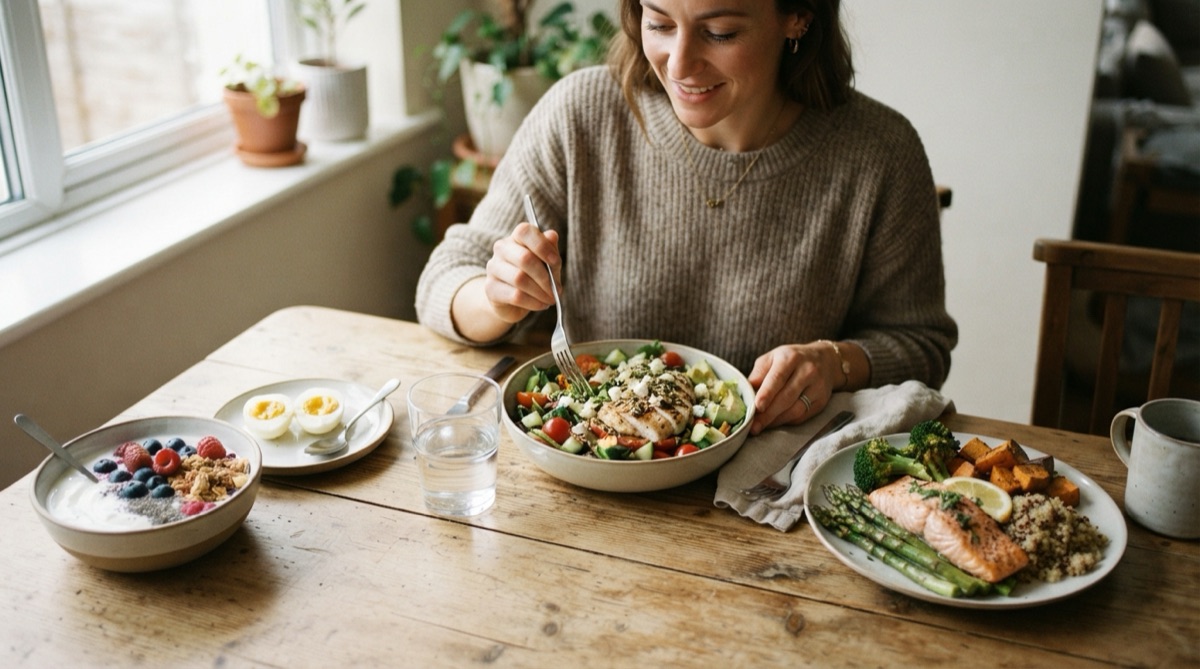
The reason most people don't hit their protein targets isn't that they don't care — it's that they think high-protein eating means expensive cuts of meat, long prep times, and meals that taste like effort. None of that is true. The easiest high-protein meals are built from four or five ingredients, take under twenty minutes, and are genuinely good to eat. The trick is knowing the builds, not the recipes.
A build is different from a recipe. A recipe tells you exactly how to make one specific dish. A build gives you a structure — protein source + supporting ingredients + format — that you can vary endlessly without needing to look anything up. Learn five builds and you have fifty meals.
Why protein matters more than most people realize
Three things happen when you eat enough protein: you feel full longer (protein suppresses hunger hormones more effectively than carbs or fat), you preserve and build muscle (even if you're not lifting weights, muscle mass matters for metabolism and aging), and your energy stays more stable between meals because protein slows the glucose absorption from the carbs you eat alongside it.
The working target for most active adults is roughly 0.7 to 1 gram of protein per pound of bodyweight per day. For a 150-pound person that's 105 to 150 grams. Divided over three meals, that means aiming for about 30 grams per meal — and breakfast is where almost everyone falls short.
Breakfast builds that hit 30g
Most breakfasts are carbohydrate-heavy and protein-light. Cereal, toast, juice — a typical breakfast might carry 8 to 10 grams of protein. Here are builds that get you to 30g or above:
- Greek yogurt + protein powder + berries (~35g). Full-fat Greek yogurt has about 17g of protein per cup. Stir in half a scoop of protein powder (another 12 to 15g) and add berries for flavor and fiber. Takes two minutes and requires zero cooking.
- Three-egg scramble + cottage cheese (~30g). Three eggs give you about 18g of protein. A half cup of cottage cheese on the side adds another 12 to 14g. Scramble the eggs with whatever vegetables you have — mushrooms, spinach, diced peppers — and the cottage cheese either alongside or stirred in for a creamier texture.
- Overnight oats + hemp seeds + Greek yogurt (~28g). Half a cup of rolled oats in a jar with almond milk overnight. In the morning, stir in Greek yogurt (10g), two tablespoons of hemp seeds (10g), and a little honey. This one you make the night before and eat from the jar, which makes it the easiest breakfast if you're rushing.
Lunch builds
- Big chicken or tuna salad. A can of tuna (25g protein) or a pre-cooked rotisserie chicken portion over a big bowl of greens, cucumber, cherry tomatoes, and half an avocado. Dress with olive oil and lemon. Twenty grams of protein in the chicken alone, plus six or seven more from two boiled eggs if you add them.
- Lentil and egg bowl. Cooked lentils (18g per cup) over rice or quinoa, topped with a fried or poached egg (6g), a scoop of Greek yogurt as a sauce, and some hot sauce. Lentils are one of the cheapest protein sources available and the canned version requires zero prep.
- Cottage cheese plate. Half a cup of cottage cheese, a can of chickpeas, sliced cucumber, cherry tomatoes, and a drizzle of olive oil. Sounds odd, works brilliantly — around 30g of protein, takes three minutes to assemble, and costs almost nothing.
Dinner builds
- Sheet pan chicken thighs and vegetables. Season bone-in chicken thighs, throw them on a pan with whatever vegetables are in your fridge — broccoli, sweet potato, zucchini — and roast at 425°F for 35 minutes. Active prep time is under ten minutes. Each thigh has about 25g of protein.
- Salmon with Greek yogurt sauce. Pan-sear salmon fillets for four minutes each side. Mix Greek yogurt with lemon, garlic, and dill for a sauce that takes one minute to make. A salmon fillet gives you 30 to 35g of protein and the healthy fats that make it feel like a restaurant meal.
- Ground turkey stir fry. Brown ground turkey in a pan (25g protein per 4oz), add frozen vegetables straight from the bag, splash in soy sauce and sesame oil, serve over rice. Fifteen minutes start to finish, one pan to wash.
How to check your protein without guessing
If you're not sure whether a meal is actually hitting 30g, snap a photo with Calovia and the AI will give you a macro breakdown — protein, carbs, fat — alongside the calorie estimate. You don't need to do this for every meal forever. A few weeks of spot-checking builds an accurate mental model of what 30g of protein actually looks like on a plate, and after that you can eyeball it reliably. For more on eating well without obsessive tracking, see how to eat healthier without going on a diet.
FAQ
What's the easiest way to get 30g of protein at breakfast?
Greek yogurt combined with eggs or a half scoop of protein powder gets you there fastest. Greek yogurt alone runs 15 to 17g per cup; two eggs add another 12g. That's your 30g with three ingredients and no cooking if you eat the yogurt cold.
Do high-protein meals have to be expensive?
No — eggs, canned tuna, canned lentils, chickpeas, and cottage cheese are among the cheapest foods in any grocery store and all run 20 to 30g of protein per serving. Chicken thighs and ground turkey are also relatively inexpensive. Expensive protein sources like salmon and steak can anchor one or two meals a week rather than every meal.
Can I track protein without logging every ingredient?
Photo scanning gives you a useful ballpark. Snap the meal, get the macro breakdown, and you'll know within a reasonable margin whether you're close to your target. You won't get the precision of weighing everything, but you'll get enough signal to know if breakfast is chronically low-protein and needs adjustment.
Snap a photo of any meal — get calories and macros in seconds.
Calovia — Take a photo of a meal and Calovia estimates calories, protein, carbs, fat, and a simple health score — no manual logging, no searching a food database.
Download Caloviafree on the App StoreKeep reading

Food Diary With Photos: The Low-Effort Way to Track Meals
A food diary with photos takes seconds per meal and shows patterns a written log misses. Compare four methods and set one up that lasts beyond week two.

How Much Fiber Per Day Do You Need? Targets and Easy Wins
How much fiber per day you need by age and sex, what 30 grams looks like on a real plate, and how to add more without bloating. Simple, sourced, practical.
How to Count Calories in Homemade Food: The Recipe Method
How to count calories in homemade food: weigh raw ingredients, weigh the finished pot, divide by your portion. A worked chili example plus a faster photo option.