How Much Fiber Per Day Do You Need? Targets and Easy Wins
How much fiber per day you need by age and sex, what 30 grams looks like on a real plate, and how to add more without bloating. Simple, sourced, practical.

Most adults should aim for about 25 to 38 grams of fiber per day: the NHS recommends 30 grams for adults, while US guidance from the National Academies sets roughly 25 grams for women and 38 grams for men, which works out to about 14 grams for every 1,000 calories you eat. Most people fall well short. The NHS notes that the average adult in the UK eats only about 20 grams a day.
Fiber gets less attention than protein or sugar, but it is one of the easiest nutrition wins available. It helps keep digestion regular, makes meals more filling, and comes packaged in foods that tend to be good for you anyway: vegetables, fruit, beans, lentils, whole grains, nuts, and seeds.
This guide covers the numbers by age and sex, what 30 grams looks like on a real day of eating, how to add fiber without discomfort, and how to check your intake without logging every bite.
How much fiber per day, by age and sex
Different health bodies phrase the target differently, but they land in the same range.
- Adults (UK): 30 g per day, according to the NHS guide to getting more fibre.
- Adults (US): about 14 g per 1,000 calories. For adults up to age 50 that is roughly 25 g for women and 38 g for men; the targets drop slightly after 50 because calorie needs fall.
- Children aged 2 to 5 (UK): about 15 g per day.
- Children aged 5 to 11 (UK): about 20 g per day.
- Children aged 11 to 16 (UK): about 25 g per day.
If you want a single number to remember, 30 grams is a sensible everyday target for most adults. If your doctor or dietitian has given you a different figure for a specific condition, theirs wins.
Why most people fall short
The gap is rarely about willpower. It comes from a few common patterns:
- Refined grains by default. White bread, white rice, regular pasta, and most breakfast cereals have had much of their fiber milled away.
- Fruit as juice instead of whole fruit. Juicing removes most of the fiber and leaves the sugar.
- Beans and lentils are rare guests. They are among the richest sources of fiber, and many people eat them only occasionally.
- Vegetables as a garnish. A few slices of tomato in a sandwich look like vegetables but add very little.
- Protein-first plates. Focusing on protein is useful, but a plate of chicken and white rice can be very low in fiber unless something else joins it.
The fix is usually not a supplement. It is swapping two or three everyday foods for higher-fiber versions.
What 30 grams of fiber looks like in a day
Fiber amounts depend on the exact product, portion, and preparation, so treat these as approximate. Check labels where you have them. The NHS treats any food with 6 grams or more of fiber per 100 grams as high in fiber.
Breakfast: about 8 to 10 g
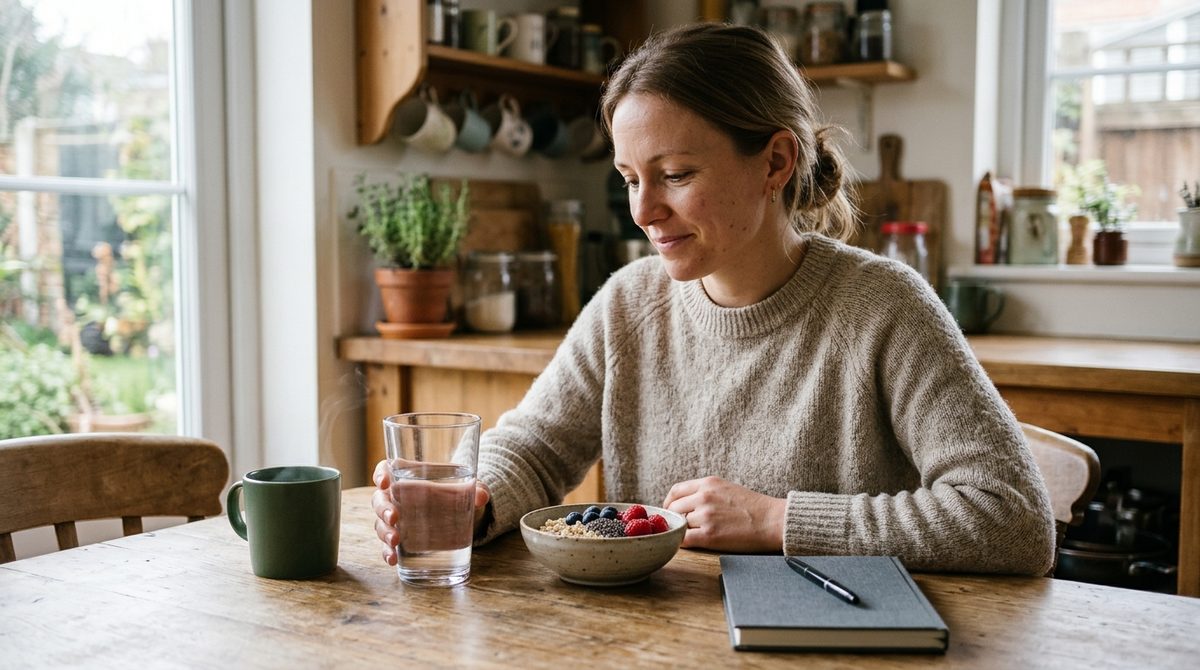
A bowl of porridge made with around 50 g of oats, topped with a handful of raspberries and a spoonful of chia or ground flaxseed. Oats, berries, and seeds are all strong sources, and together they make a breakfast that keeps you full well into the morning.
Lunch: about 10 g
A lentil or bean soup with a slice of wholemeal bread, or a wholemeal wrap filled with chickpeas, salad, and hummus. Pulses do most of the work here: a typical portion of cooked lentils or chickpeas carries several grams of fiber on its own.
Snack: about 3 to 5 g
An apple or pear with the skin on, or a small handful of almonds. Keeping the skin is worth it, because much of a fruit's fiber sits in or just under it.
Dinner: about 8 to 10 g
A palm of fish or chicken, a skin-on baked potato or a serving of brown rice, and two generous portions of vegetables such as broccoli, carrots, peas, or green beans. The NHS gives a similar example dinner of grilled chicken, skin-on baked potato, carrots, and green beans at around 11 grams.
Add those up and you are around 30 grams without eating anything unusual. The pattern is simple: a whole grain or pulse at most meals, vegetables taking real space on the plate, and whole fruit rather than juice. If that plate shape sounds familiar, it is essentially the balanced plate method with fiber in mind.
How to add fiber without discomfort
Jumping from 15 grams to 35 grams overnight is a common way to end up bloated and uncomfortable. A gentler approach works better.
- Increase gradually. Add one higher-fiber swap every few days rather than overhauling every meal at once. This gives your gut time to adjust.
- Drink enough fluid. Fiber works best with water. If you add fiber, add a glass of water or two across the day as well.
- Mix your sources. Oats, beans, and many fruits are rich in soluble fiber, which forms a gel in the gut. Whole grains, nuts, and vegetable skins add more insoluble fiber, which adds bulk. Most fiber-rich foods contain both, and variety covers both types.
- Prefer food over powders where you can. Whole foods bring vitamins, minerals, and other plant compounds along with the fiber.
If you have a digestive condition such as IBS or inflammatory bowel disease, or you have been told to follow a low-fiber diet, talk to your doctor or a dietitian before changing your intake. Some people need specific types or amounts of fiber, and general targets may not apply.
A worked example: checking your fiber without logging
Counting fiber gram by gram is tedious, and most people do not need to. A quicker way is to spot-check a few typical days and look for the gaps.
Say Hana suspects her diet is low in fiber. For three ordinary weekdays she photographs her meals with Calovia, which estimates fiber alongside calories, protein, carbs, fat, and sugar for each scanned meal. She does not weigh or type anything.
Looking back through her recent scans in the app, the picture is clear. Her breakfasts, usually toast with jam, come in at only a couple of grams of fiber. Her lunches, usually a white-bread sandwich, add a few more. Dinner is her best meal, with vegetables and potatoes. Most days she is landing somewhere in the mid-teens, roughly half the target.
She makes two changes, then keeps scanning with Calovia to check the result: overnight oats with berries instead of toast, and a lentil soup or bean salad at lunch three days a week. A week later she scans the same kinds of days again, and the estimates show her breakfasts and lunches now carry several times more fiber. She did not change dinner at all.
Calovia's numbers are AI estimates for everyday awareness, not exact measurements. A photo cannot tell whether bread is wholemeal or white if they look alike, so it helps to know what you are eating. But for answering "am I roughly in range, and which meal is the weak spot?", a few scanned days are often enough. If you want the same quick check for other nutrients, see our guide to how much protein you need per day.
FAQ
How much fiber should a woman eat per day?
The NHS recommends 30 grams a day for all adults. US guidance from the National Academies sets about 25 grams a day for women up to age 50 and about 21 grams after 50, based on roughly 14 grams per 1,000 calories. Pregnancy and specific health conditions can change the target, so ask your clinician.
How much fiber should a man eat per day?
The NHS recommends 30 grams a day for adults. US guidance sets about 38 grams a day for men up to age 50 and about 30 grams after 50, reflecting higher average calorie needs. Most men eat considerably less than either figure, so the practical goal is usually to add more.
Is it possible to eat too much fiber?
Yes. Increasing fiber very quickly, or eating very large amounts, can cause bloating, gas, cramps, and changes in bowel habits. Raising your intake gradually and drinking enough fluid usually prevents this. People with certain digestive conditions may need a specific fiber plan from their doctor or dietitian.
What foods are highest in fiber?
Beans, lentils, and chickpeas are among the richest everyday sources, followed by whole grains like oats, wholemeal bread, and brown rice, plus berries, pears, apples with skin, nuts, seeds such as chia and flax, and vegetables like peas, broccoli, and carrots. Check labels, since processing changes fiber content.
Snap a photo of any meal — get calories and macros in seconds.
Calovia — Take a photo of a meal and Calovia estimates calories, protein, carbs, fat, and a simple health score — no manual logging, no searching a food database.
Download Caloviafree on the App StoreKeep reading

Food Diary With Photos: The Low-Effort Way to Track Meals
A food diary with photos takes seconds per meal and shows patterns a written log misses. Compare four methods and set one up that lasts beyond week two.

How to Count Calories in Homemade Food: The Recipe Method
How to count calories in homemade food: weigh raw ingredients, weigh the finished pot, divide by your portion. A worked chili example plus a faster photo option.

How to Track Calories While Traveling: A Photo-First Routine
How to track calories while traveling: a photo-first routine that takes seconds per meal, handles buffets and street food, and keeps your holiday enjoyable.