How to Track Calories While Traveling: A Photo-First Routine
How to track calories while traveling: a photo-first routine that takes seconds per meal, handles buffets and street food, and keeps your holiday enjoyable.
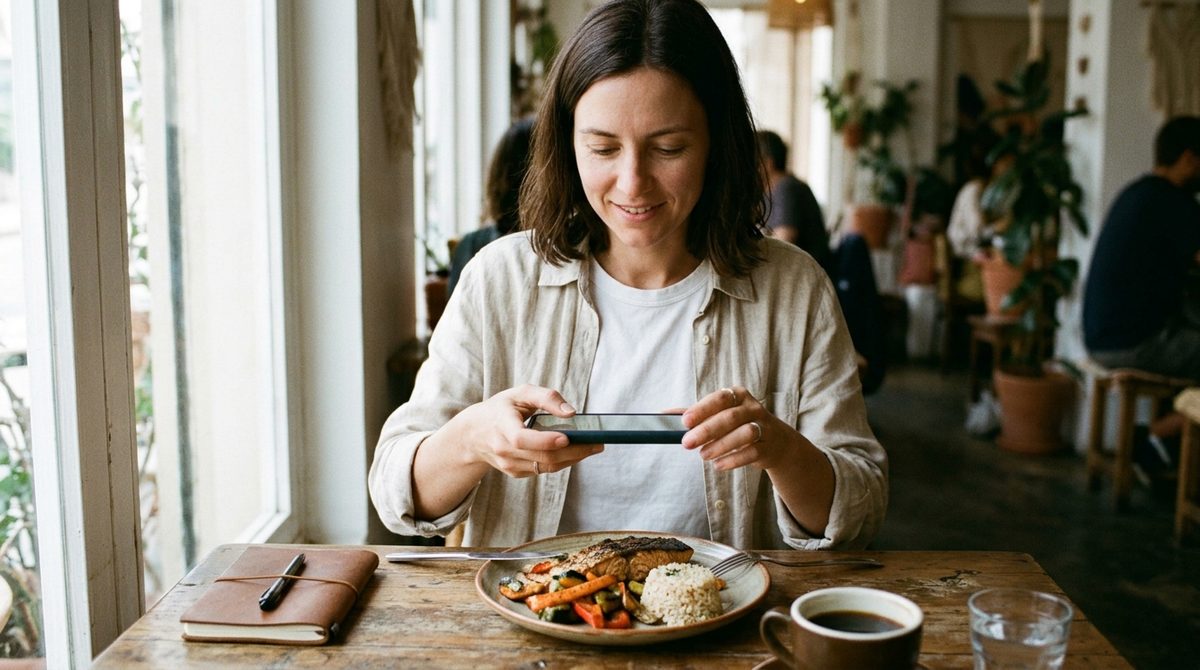
The easiest way to track calories while traveling is to stop trying to log every ingredient and switch to a light routine: photograph each meal before you eat, glance at a rough estimate, and review the trip as a whole rather than day by day. Travel food is unfamiliar, unlabeled, and often shared, so precise logging collapses within a day or two. A quick estimate you actually keep up is worth far more than a perfect log you abandon at the airport.
Travel is also when tracking feels least important and most useful. Routines disappear, meals get bigger, and drinks multiply. You do not need to diet on holiday, and for most trips you should not. But if you want to come home without the vague sense that the week got away from you, a small amount of awareness goes a long way.
This guide covers why normal tracking breaks on the road, a travel routine that takes seconds per meal, a worked example from a real-style city break, and how to handle the awkward cases.
Why normal calorie tracking breaks when you travel
Most tracking methods quietly depend on your home routine. Travel removes every one of those supports:
- No labels and no scale. Street food, market stalls, and family-run restaurants rarely publish nutrition information, and you will not be weighing anything in a hotel room.
- Unfamiliar dishes. A food database may have no entry for a regional dish, or ten entries with wildly different numbers.
- Shared plates. Tapas, mezze, dim sum, and family-style dinners make "how much did I eat?" genuinely hard to answer.
- Language barriers. Searching for a dish when you are not sure of its name, or how it was cooked, is slow and frustrating.
- Irregular timing. Long flights, late dinners, and skipped breakfasts break the meal pattern that tracking habits hang on.
The fix is not more discipline. It is a lower-effort method that fits how you eat while you are away.
A travel tracking routine that takes seconds
1. Photograph before the first bite
Make it part of sitting down. A full plate is easy to estimate later; a half-eaten one is not. Most travelers already photograph their food, so this is a habit you probably have.
2. Get an estimate, not a ledger
With Calovia, you photograph the meal or pick the photo from your library, and the AI estimates calories, protein, carbs, fat, fiber, and sugar for what it sees, plus a simple health score. There is no database to search and no need to know the dish's name, which is exactly what you want when the menu is in a language you do not read. The scan is sent to the AI for analysis, so it needs a connection. If you are offline, take the photo anyway and scan it from your library later that evening.
3. Glance at two numbers
Do not study every macro. Look at the calorie ballpark and the protein. That is enough to notice a pattern, such as every lunch being a pastry or every dinner coming in very heavy.
4. Count drinks separately
Cocktails, beer, wine, juices, and sweet coffees are the biggest invisible calorie source on most trips, and they are rarely in the food photo. The NHS lists a pint of 5% beer at up to about 222 calories and a standard 175 ml glass of 12% wine at up to about 158 in its guide to calories in alcohol. Put the glass in frame or make a mental note. Our guide to estimating calories in restaurant meals has more on the extras you cannot see.
5. Review the trip, not the day
One heavy day on holiday means nothing. Calovia keeps your recent scans in the app, so on the flight home, or a couple of times during a longer trip, you can scroll back and see the overall shape: how many big meals, how much protein, how often you snacked.
A worked example: four days in Lisbon
Linh goes on a four-day city break and wants to enjoy the food without losing all sense of what she is eating. She does not set a calorie target. She photographs each meal with Calovia and looks at the estimate for a few seconds.
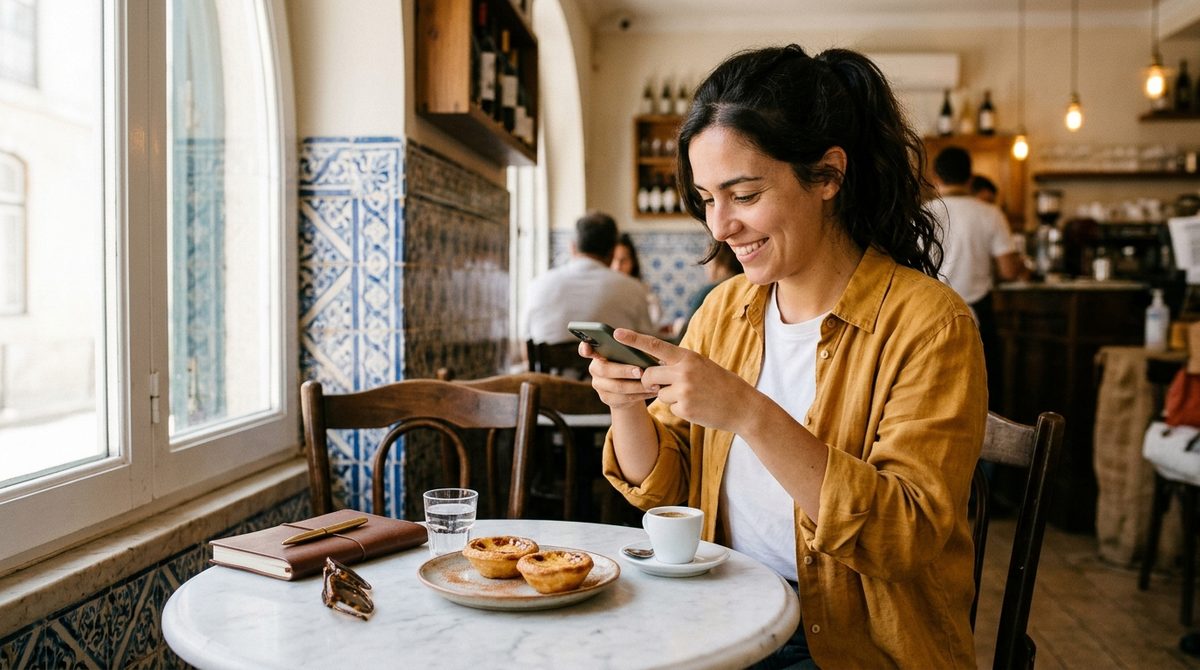
Day 1. Breakfast is two custard tarts and a coffee. Lunch is grilled sardines with bread and salad. Dinner is a seafood rice dish shared with a friend, plus two glasses of wine. She scans each plate before eating; for the shared rice she photographs the portion she serves herself.
Day 2. She notices from the previous day's scans that the pastry breakfast had very little protein and she was starving by 11 a.m. She swaps to eggs and bread at the hotel and keeps the custard tart for an afternoon treat instead.
Day 3. A long day of walking, a sandwich on the go, and a big dinner. The dinner estimate is high, and she enjoys every bite. She does not compensate the next day by skipping meals.
Day 4. On the flight home she scrolls through the trip's scans. The pattern is clear and unsurprising: generous dinners, low-protein breakfasts on the first day, and wine most evenings. Nothing about it worries her. She now knows what the trip looked like, and that is the point.
The value here was not a precise total. It was swapping one breakfast that left her hungry, and coming home with an accurate picture instead of a guess.
Handling the awkward cases
Buffets and hotel breakfasts
Photograph each plate you take, not the buffet. If you go back for seconds, photograph the second plate too. A common pattern is a reasonable first plate and a large second one.
Shared plates and tapas
Serve your share onto your own plate before scanning, if you can. If dishes are eaten straight from the middle of the table, photograph the spread and make a rough guess at your share. An honest "about a third" is fine.
Street food and snacks
These are quick to scan and easy to forget. One photo per item is enough. Fried snacks deserve a mental round-up, because no photo can see how much oil was absorbed during frying.
Flights and long travel days
Airport and airline food is often eaten out of boredom as much as hunger. A scan of the tray takes seconds and tends to make the decision to eat it more deliberate.
Keep it in proportion
Travel is supposed to be enjoyable, and food is often the best part. Tracking on holiday should give you awareness, not guilt. If you notice yourself skipping experiences or meals because of a number, it is a sign to stop tracking for the rest of the trip.
All the figures in a photo-based app are AI estimates for everyday awareness, not medical or clinical nutrition advice. Restaurant cooking especially involves oil, butter, and sugar that no camera can see, so treat every number as a ballpark. If you have a medical reason to track intake precisely, follow your clinician's plan while you travel. For a broader look at whether tracking is worth the effort, see our honest answer to whether calorie counting is worth it.
FAQ
Should I count calories on vacation?
Only if it adds something for you. Many people prefer a light awareness habit, like photographing meals and glancing at estimates, rather than strict counting. If tracking makes the trip less enjoyable or causes anxiety about food, taking a break from it for the holiday is a perfectly reasonable choice.
How do I track calories when I don't know what the dish is?
Use a photo-based tracker. An app like Calovia identifies what is on the plate from a picture and estimates calories and macros without you needing the dish's name or a database entry. Treat the result as a ballpark, since sauces and cooking oil are not visible in a photo.
Can I track calories offline while traveling?
You can capture meals offline by taking photos as usual. AI photo analysis needs an internet connection, so with Calovia you can pick those photos from your library and scan them later when you are back on Wi-Fi or mobile data.
What is the easiest way to avoid overeating while traveling?
Keep one anchor meal, often breakfast, simple and protein-rich, count drinks as part of the day, and serve shared dishes onto your own plate. Looking at a quick estimate before eating makes large portions more visible without turning every meal into a calculation.
Snap a photo of any meal — get calories and macros in seconds.
Calovia — Take a photo of a meal and Calovia estimates calories, protein, carbs, fat, and a simple health score — no manual logging, no searching a food database.
Download Caloviafree on the App StoreKeep reading
Food Diary With Photos: The Low-Effort Way to Track Meals
A food diary with photos takes seconds per meal and shows patterns a written log misses. Compare four methods and set one up that lasts beyond week two.

How Much Fiber Per Day Do You Need? Targets and Easy Wins
How much fiber per day you need by age and sex, what 30 grams looks like on a real plate, and how to add more without bloating. Simple, sourced, practical.
How to Count Calories in Homemade Food: The Recipe Method
How to count calories in homemade food: weigh raw ingredients, weigh the finished pot, divide by your portion. A worked chili example plus a faster photo option.