The Balanced Plate Method: A Healthy Meal Without a Recipe
Forget counting every gram. The plate method builds a balanced meal by proportion — half veg, a quarter protein, a quarter carbs. Here is how to use it at any meal, anywhere.
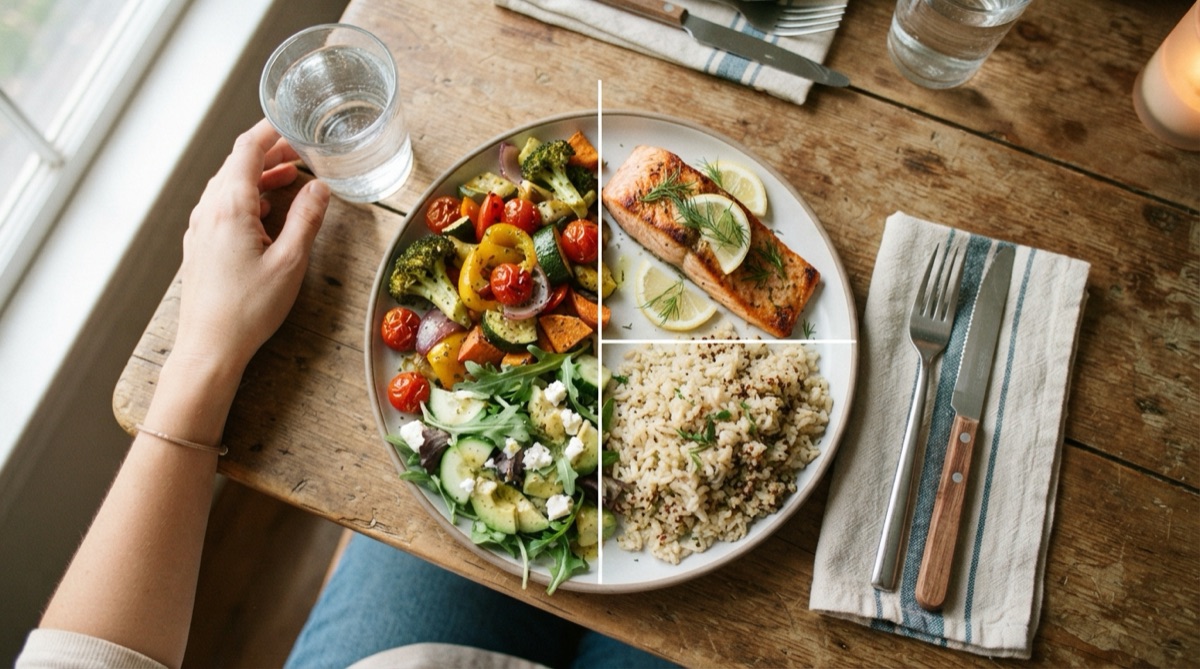
If counting calories and weighing food feels like too much, there is a simpler system that gets you most of the way there with zero math: the balanced plate method. Instead of tracking numbers, you build each meal by proportion, using the plate itself as your measuring tool. It is the approach dietitians reach for when someone wants to eat well without turning every meal into a data-entry task.
The core formula is easy to picture and easy to remember. It quietly controls portions, guarantees fiber and protein at every meal, and works whether you are at home, at a restaurant, or standing over a buffet.
The basic formula
Divide your plate — a standard nine to ten inch dinner plate, not a platter — into three parts:
- Half the plate: non-starchy vegetables. Salad, broccoli, peppers, green beans, roasted veg, whatever you like. This is the volume and fiber that fills you up for few calories.
- A quarter: protein. Chicken, fish, eggs, tofu, beans, lean meat — roughly a palm-sized portion. Protein keeps you full and protects muscle.
- A quarter: carbohydrates. Rice, potato, pasta, bread, or grains — ideally whole-grain. About a fist-sized portion.
Add a piece of fruit or a small serving of dairy on the side if you like, and make water your default drink. That is the whole method.
Why it works so well
The plate method is deceptively powerful because it fixes the two things people most often get wrong without them having to think about either:
- It caps the calorie-dense stuff automatically. Carbs and protein are limited to a quarter each, so the parts of the meal that add up fastest are naturally portion-controlled — no counting required.
- It guarantees fiber and volume. Half a plate of vegetables means you arrive at the calorie-dense foods already partly full, so you eat less of them without feeling deprived. It is the high-volume eating principle baked into a simple picture.
Because it works by proportion rather than absolute amounts, it scales to your appetite: a bigger person uses a bigger plate's worth, a smaller person less, and the ratios keep the meal balanced either way.
Adjusting the plate for your goal
The classic half-quarter-quarter split is a great default, but you can tilt it:
- Fat loss: shrink the carb quarter, grow the vegetables, and keep protein steady. More volume, fewer calories, same fullness.
- Building muscle or very active days: bump protein toward a third and keep a full carb portion to fuel training. Our guide to daily protein needs helps you set the target.
- Understanding the why: the three plate sections map directly onto the three macronutrients, explained plainly in what are macros.
Using it in the real world
The plate method shines exactly where calorie counting struggles — meals you did not cook. At a restaurant, mentally divide the plate before you dig in and set aside the excess starch. At a buffet, fill half your plate with vegetables first, before the tempting stuff crowds it out. For mixed dishes like stir-fries or pasta where the components are jumbled together, the plate method gets fuzzy — that is the moment to snap a photo and let Calovia estimate the calories and macros, giving you a numerical sanity check the eyeball method cannot.
As always, this is a framework for generally healthy eating, not a medical plan. If you manage diabetes, follow a therapeutic diet, or have specific clinical needs, your dietitian's guidance takes precedence over any general rule of thumb.
FAQ
What are the correct proportions for the balanced plate method?
Fill half your plate with non-starchy vegetables, one quarter with protein, and one quarter with carbohydrates, preferably whole grains, using a standard nine to ten inch dinner plate. Add fruit or dairy on the side and choose water as your drink.
Does the plate method work for weight loss?
Yes, for many people it is enough on its own, because filling half the plate with vegetables and capping carbs and protein at a quarter each naturally creates a modest calorie deficit without counting. For faster loss you can shrink the carb portion and add more vegetables.
How do I use the plate method with mixed dishes like curry or pasta?
It works best with separable foods; for jumbled dishes, estimate the rough share of vegetables, protein, and starch, or take a photo and use a scanner to get an actual calorie and macro breakdown. Mixed meals are exactly where a quick photo estimate complements the visual method.
Snap a photo of any meal — get calories and macros in seconds.
Calovia — Take a photo of a meal and Calovia estimates calories, protein, carbs, fat, and a simple health score — no manual logging, no searching a food database.
Download Caloviafree on the App StoreKeep reading
Food Diary With Photos: The Low-Effort Way to Track Meals
A food diary with photos takes seconds per meal and shows patterns a written log misses. Compare four methods and set one up that lasts beyond week two.

How Much Fiber Per Day Do You Need? Targets and Easy Wins
How much fiber per day you need by age and sex, what 30 grams looks like on a real plate, and how to add more without bloating. Simple, sourced, practical.
How to Count Calories in Homemade Food: The Recipe Method
How to count calories in homemade food: weigh raw ingredients, weigh the finished pot, divide by your portion. A worked chili example plus a faster photo option.