What Are Macros? A Simple Guide to Protein, Carbs, and Fat
What are macros? A plain-English guide to the three macronutrients — what each does, how much you need, and how to track them without obsessing over numbers.
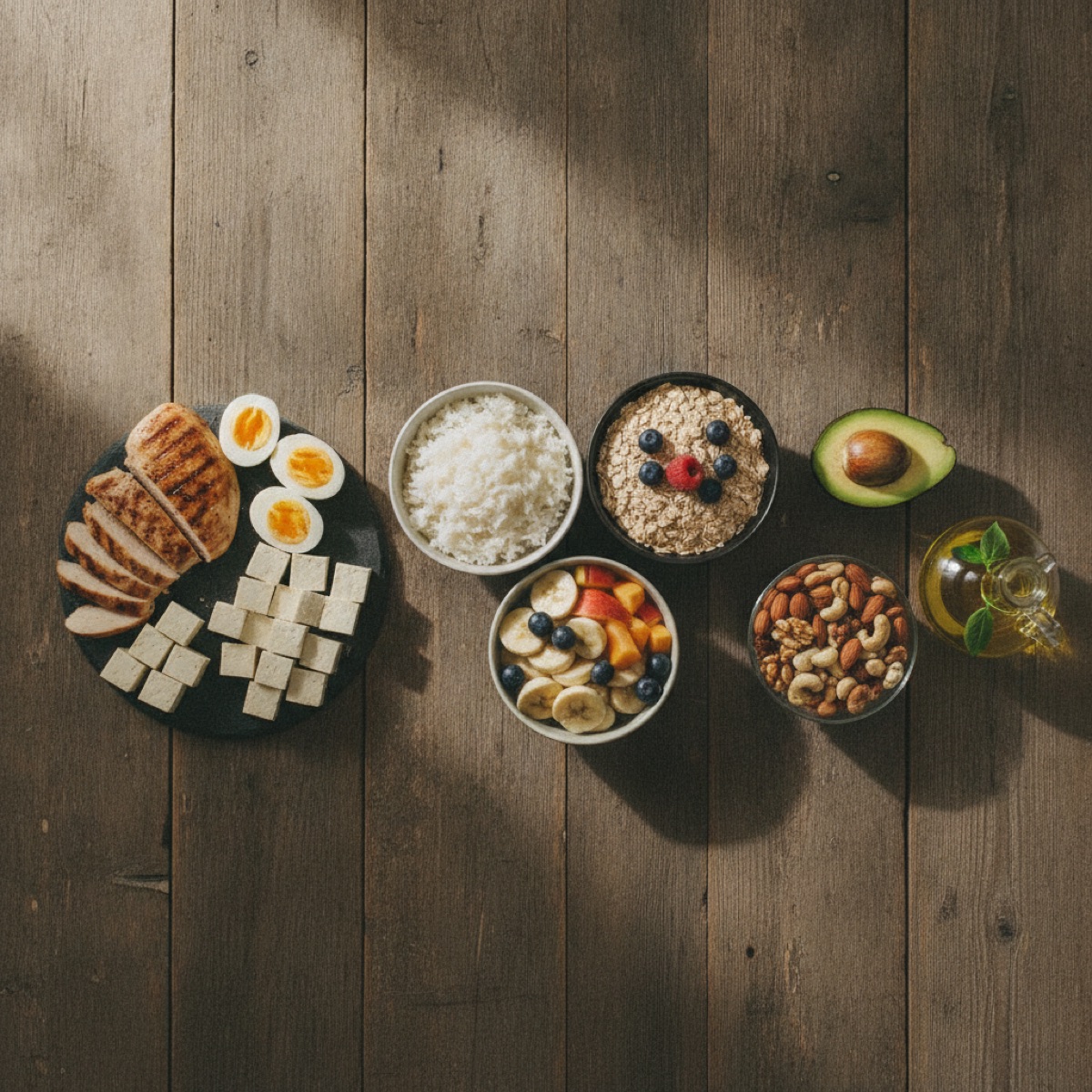
Macros is short for macronutrients, and macronutrients are the three building blocks that all food is made of: protein, carbohydrates, and fat. Every calorie you eat comes from one of these three sources. That's the whole definition. The reason people talk about macros is that the proportion of these three nutrients — not just the total calories — has a meaningful effect on how your body uses what you eat, how hungry you feel, and how your body composition changes over time.
This guide covers what each macro does, roughly how much of each you need, and how to think about tracking them without turning every meal into a math problem.
Protein: what it does and how much you need
Protein's primary job is construction and repair. Every cell in your body contains protein, and muscles in particular require a steady supply to rebuild after use — including ordinary daily movement, not just intense exercise. Protein also has a notable hunger-suppressing effect: it slows digestion, stimulates satiety hormones, and keeps blood sugar more stable than the same number of calories from carbs alone.
Foods high in protein include meat, poultry, fish, eggs, dairy (especially Greek yogurt and cottage cheese), legumes, tofu, and protein powders. For active adults, a reasonable target is 0.7 to 1 gram per pound of bodyweight per day. For a sedentary lifestyle, 0.5 grams per pound is a common guideline. Most people — even those who think they eat a lot of protein — are below where they could be.
Carbohydrates: the misunderstood macro
Carbohydrates are your body's preferred energy source. Your brain runs almost exclusively on glucose (broken down from carbs), and during exercise, carbs are the primary fuel. Despite the cultural backlash against them, carbohydrates are not inherently fattening — excess calories from any macro cause fat gain, and carbs are no different.
The distinction that matters is between complex and simple carbohydrates. Complex carbs — whole grains, legumes, vegetables, oats — digest slowly, provide sustained energy, and come packaged with fiber and micronutrients. Simple carbs — white sugar, refined flour, most processed snack foods — digest quickly, spike blood sugar, and carry little nutritional value alongside the calories. The goal isn't to eliminate carbs; it's to make whole-food sources the default and treat refined sources as an occasional choice.
Fat: what it does and why it won't make you fat
Dietary fat has had an unfair reputation for decades, largely due to research from the mid-twentieth century that has since been heavily revised. Eating fat does not directly cause body fat gain — a calorie surplus does, regardless of which macro provides it. What fat actually does:
- Supports hormone production. Many hormones, including testosterone and estrogen, are synthesized from dietary fat. Very low-fat diets can impair hormonal function.
- Enables vitamin absorption. Vitamins A, D, E, and K are fat-soluble, meaning they require dietary fat to be absorbed. Eating a salad with no fat dressing means absorbing far less of the nutrients in those vegetables.
- Provides satiety. Fat slows gastric emptying, which is why meals with a healthy fat component keep you satisfied longer than low-fat alternatives.
Healthy fat sources include olive oil, avocado, nuts, seeds, fatty fish, and eggs. Ultra-processed trans fats — found in some fried foods and commercial baked goods — are the category worth limiting; natural saturated fats from whole foods are more nuanced than the old "saturated fat is always bad" framing suggested.
Why macro ratios matter for body composition
Two people eating the same number of calories can have meaningfully different results if their macro ratios differ. High protein intake during a calorie deficit preserves muscle mass while fat is lost — low-protein deficits tend to lose both muscle and fat, which is less desirable. Adequate fat supports hormones that regulate recovery and mood. Carb timing around exercise can improve performance and recovery. None of this means you need to obsess over exact ratios, but having a general sense of your macro split gives you more control over outcomes than tracking only total calories.
A common beginner starting point is roughly 40 percent carbs, 30 percent protein, and 30 percent fat — sometimes called 40/30/30. This isn't a law; it's a reasonable default that most people do well on, and you can adjust from there based on how you feel and what your goals are.
How to see your macros without a food scale
Photo scanning apps like Calovia give you a macro breakdown — protein, carbs, and fat — from a single picture of your meal. This is the practical middle ground between doing nothing and weighing everything: you get real feedback, you learn what different macro profiles actually look like on a plate, and you don't need to carry a scale to a restaurant. For a deeper look at how accurate those photo estimates are, see our honest look at AI calorie counter accuracy.
A few weeks of scanning meals occasionally is usually enough to build a working intuition for macros. After that, you can estimate reasonably well just by looking at a plate — which is how most experienced, healthy eaters actually operate.
FAQ
Do I need to track macros to lose weight?
No — a calorie deficit drives fat loss regardless of macro tracking. But awareness of your macro split can help you lose fat without losing muscle (keep protein high), feel less hungry during a deficit (protein and fat both help), and sustain energy (adequate carbs). Tracking occasionally for awareness is more useful than either obsessive daily logging or complete ignorance.
What's a good macro ratio for beginners?
40 percent carbohydrates, 30 percent protein, and 30 percent fat is a common and broadly useful starting point. It's high enough in protein to protect muscle, reasonable in carbs for energy, and not so low in fat that hormones are affected. Adjust over a few weeks based on how your energy, hunger, and body composition respond.
How do I know my macros without a food scale?
Combine photo scanning with hand-size estimates. A palm of protein, a fist of carbs, a thumb of fat at each meal gets you in the right ballpark. A photo-scanning app adds the numerical feedback for meals that are harder to estimate visually — sauces, mixed dishes, restaurant meals — and builds your intuition over time.
Snap a photo of any meal — get calories and macros in seconds.
Calovia — Take a photo of a meal and Calovia estimates calories, protein, carbs, fat, and a simple health score — no manual logging, no searching a food database.
Download Caloviafree on the App StoreKeep reading

Food Diary With Photos: The Low-Effort Way to Track Meals
A food diary with photos takes seconds per meal and shows patterns a written log misses. Compare four methods and set one up that lasts beyond week two.

How Much Fiber Per Day Do You Need? Targets and Easy Wins
How much fiber per day you need by age and sex, what 30 grams looks like on a real plate, and how to add more without bloating. Simple, sourced, practical.

How to Count Calories in Homemade Food: The Recipe Method
How to count calories in homemade food: weigh raw ingredients, weigh the finished pot, divide by your portion. A worked chili example plus a faster photo option.