Liquid Calories: How to Track the Drinks You Forget
Liquid calories from coffee, juice, soda and alcohol add up fast and rarely get tracked. Here is where they hide and a simple way to count them without quitting.
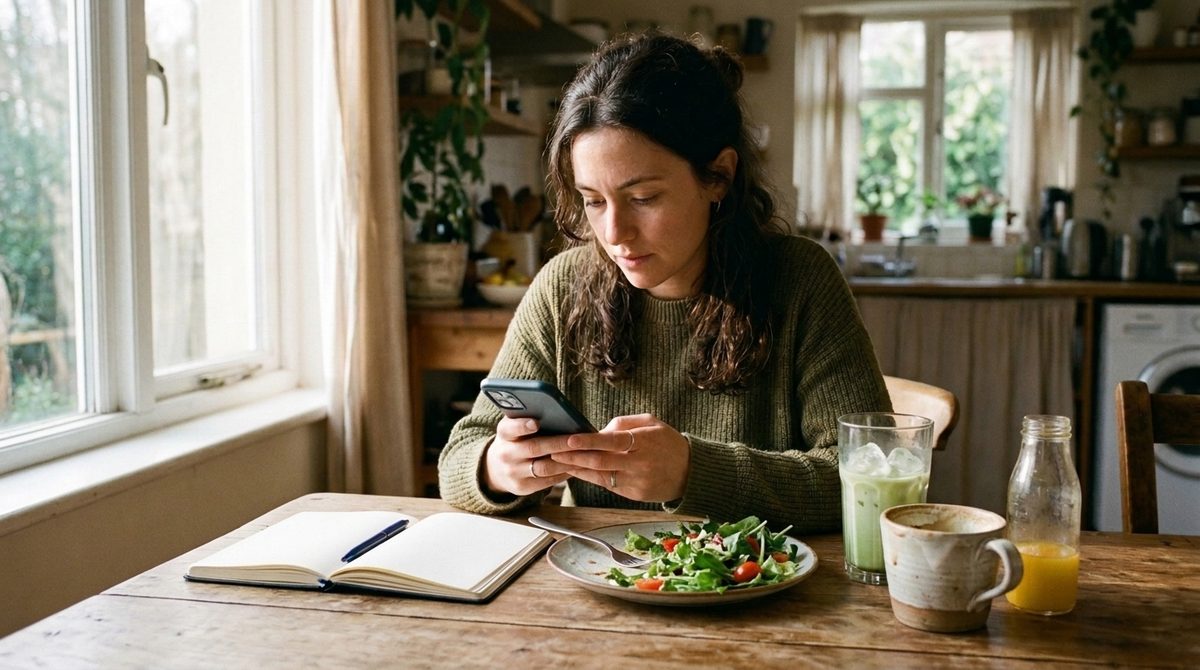
Liquid calories are the calories in what you drink rather than what you eat: soda, juice, sweetened coffee, smoothies, sports drinks, alcohol, and milk. They count exactly the same as calories from food, but they are the ones people most often forget to track, because a drink rarely feels like a meal.
That is the whole problem in one sentence. A person can be careful about every plate and still miss a few hundred calories a day that arrive in a cup or a glass. You do not need to give up anything you enjoy to fix it. You only need to see it.
This guide covers where liquid calories hide, why they slip past even careful trackers, a simple way to track them, and a worked example of an ordinary day.
Where liquid calories hide
Some drinks are obvious. Others carry far more than people expect. According to the CDC's Rethink Your Drink guide, a 12-ounce can of regular soda contains about 155 calories and roughly 10 teaspoons of sugar, a sweet tea of the same size about 115, a sports drink about 97, and an energy drink about 162. The CDC also notes that sugary drinks are the leading source of added sugars in the American diet.
The usual suspects, grouped by how surprising they tend to be:
- Obvious: regular soda, energy drinks, milkshakes, sweetened iced tea.
- Underestimated: fruit juice and smoothies. They feel healthy, and they do bring vitamins, but a large smoothie can carry as much as a small meal, mostly as sugar.
- Coffee-shop drinks: a plain black coffee or tea is close to zero. Add whole milk, syrup, whipped cream, and a large cup, and a single drink can run to several hundred calories. Chains usually publish the numbers, and they are worth checking once for your regular order.
- Alcohol: alcohol itself contains about 7 calories per gram, almost as much as fat, before any mixer. A large glass of wine or a pint of beer can each come to roughly 150 to 220 calories depending on strength and size, and cocktails with juice or syrup can be more.
- "Healthy" add-ons: oat or almond milk barista blends, protein shakes made with milk and fruit, kombucha with added sugar, and sweetened plant milks all vary widely. Check the label.
Why liquid calories slip past careful trackers
There are three reasons drinks are the most commonly missed item in a food diary.
They do not feel like eating. You sit down to a meal, but you sip a drink while doing something else. If tracking is tied to meals, drinks fall through the gap.
They are spread across the day. One latte, one juice, a soda at lunch, two glasses of wine at dinner. None of them looks significant on its own, but together they can rival a meal.
They do not show up in food photos. If you photograph your plate but the drink sits out of frame, a photo-based tracker never sees it. Many people find, too, that drinks do not fill them up the way food does, so the calories arrive without much signal from hunger.
How to track liquid calories, step by step
1. Audit one normal day
Pick an ordinary weekday and write down, or photograph, every drink that is not water, plain tea, or black coffee. Include the milk and sugar you add yourself. This one day usually reveals most of what matters.
2. Look up your regulars once
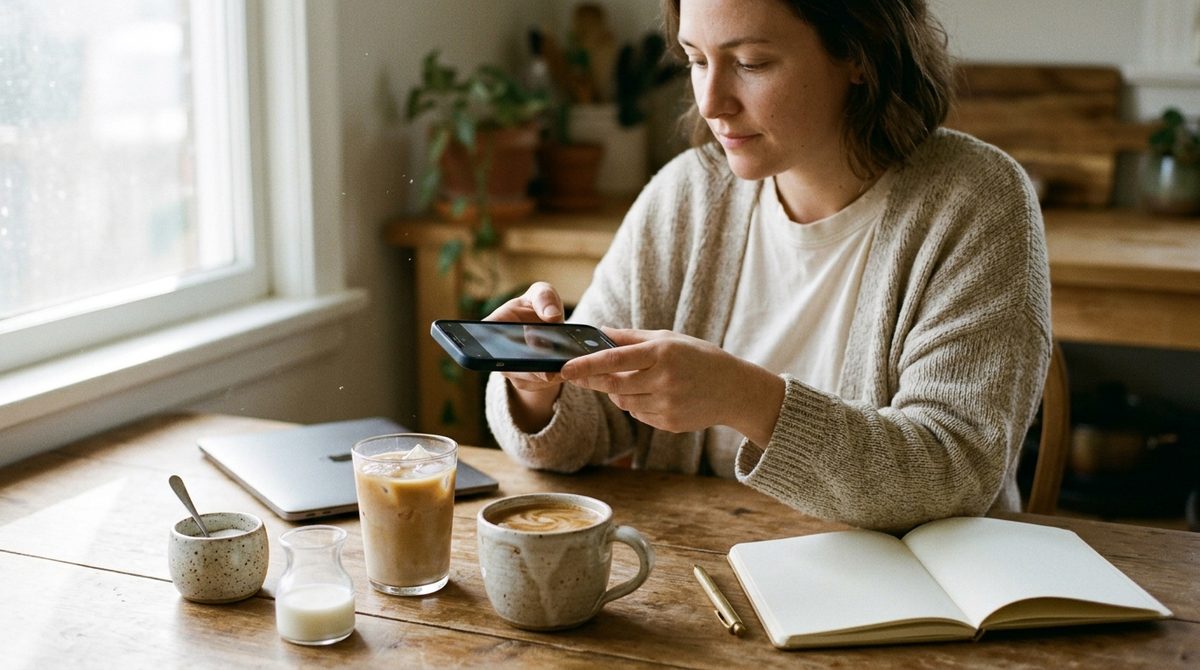
Most people rotate through a handful of drinks. Look up each one once, using the label, the chain's nutrition page, or a scan, and note the number. After that you are not calculating, you are remembering.
3. Put the drink in the photo
If you use a photo-based tracker, move the glass or cup into the frame before you take the picture. With Calovia, a meal photo that includes the drink lets the AI estimate the whole meal at once: calories, protein, carbs, fat, fiber, and sugar, plus a simple health score. A clear glass of juice or a glass of wine gives the AI much more to work with than a closed takeaway cup, so for coffee-shop drinks the chain's published number is usually the better source.
4. Decide which drinks are worth keeping
Once the numbers are visible, most people find one or two drinks they would happily swap and one or two they would not give up. Keep the ones you love. Swap the ones you were drinking on autopilot.
A worked example: one ordinary day
Here is a realistic weekday for someone who eats reasonably well and was surprised by the total. The figures are typical estimates, and your exact drinks will differ.
- 8 a.m.: a large flavored latte with whole milk on the way to work. Checking the chain's nutrition page puts it at around 300 calories.
- 11 a.m.: a bottle of orange juice from the office fridge, around 150 to 200 calories depending on size.
- 1 p.m.: a can of regular soda with lunch, about 155 calories.
- 8 p.m.: two large glasses of wine with dinner, roughly 300 to 400 calories together.
That is somewhere between 900 and 1,050 calories from drinks alone, close to half of many adults' daily needs, and none of it appeared in the photos of breakfast, lunch, or dinner. Their food tracking was accurate. Their drink tracking did not exist.
The changes they chose were small: a regular latte with less syrup, water or sparkling water instead of the juice and soda, and wine kept to the weekend or to one glass on weeknights. They kept the morning coffee because it is the drink they actually enjoy. Nothing about the meals changed.
If you are working out what a sensible daily total looks like for you, start with our guide to how many calories you should eat a day, and if sugar is the concern, see how much sugar per day is too much.
Easy swaps that keep the drink
The goal is not to drink only water. It is to make the high-calorie drinks deliberate.
- Size down before you cut out. A small instead of a large often halves the number with no change in habit.
- Ask for half the syrup. Most of a flavored coffee's sugar comes from the pumps of syrup, and half is usually still sweet enough.
- Eat the fruit, drink the water. Whole fruit keeps the fiber that juice removes and is more filling.
- Alternate alcoholic drinks with water. It slows the pace of the evening and naturally reduces how much you drink.
- Check your regulars once. A quick Calovia scan of a drink in a clear glass, or the chain's published figure for a takeaway cup, is enough to know which ones matter.
- Use sparkling water as the default. It scratches the soda itch for many people, especially with a slice of citrus.
As with any tracking, these numbers are estimates for everyday awareness, not medical advice. If you manage diabetes or another condition where sugar or calorie intake matters clinically, follow the plan your doctor or dietitian gives you, and treat any app estimate as a rough guide only.
FAQ
Do liquid calories count the same as food calories?
Yes. A calorie from a drink provides the same energy as a calorie from food. The difference is practical: drinks are easy to forget when tracking, and many people find they are less filling than solid food, so liquid calories can add up without much effect on appetite.
Which drinks have the most calories?
Large coffee-shop drinks with whole milk, syrup, and cream, milkshakes, smoothies, sugary sodas and energy drinks, fruit juice in large servings, and alcoholic drinks, especially cocktails made with juice or syrup, tend to be the highest. Plain water, black coffee, and unsweetened tea are close to zero.
How do I track calories in drinks?
Audit one normal day, look up your regular drinks once using labels or published nutrition info, and include drinks in your food photos so they are not forgotten. A photo app like Calovia can estimate a visible drink with the meal; for closed takeaway cups, the chain's own figures are more reliable.
Is fruit juice as bad as soda?
Juice brings vitamins that soda does not, but per glass it can carry a similar amount of sugar and calories, and juicing removes most of the fiber. Whole fruit is generally the better choice. If you enjoy juice, a small glass alongside a meal is easier to fit in than a large bottle.
Snap a photo of any meal — get calories and macros in seconds.
Calovia — Take a photo of a meal and Calovia estimates calories, protein, carbs, fat, and a simple health score — no manual logging, no searching a food database.
Download Caloviafree on the App StoreKeep reading

Food Diary With Photos: The Low-Effort Way to Track Meals
A food diary with photos takes seconds per meal and shows patterns a written log misses. Compare four methods and set one up that lasts beyond week two.

How Much Fiber Per Day Do You Need? Targets and Easy Wins
How much fiber per day you need by age and sex, what 30 grams looks like on a real plate, and how to add more without bloating. Simple, sourced, practical.
How to Count Calories in Homemade Food: The Recipe Method
How to count calories in homemade food: weigh raw ingredients, weigh the finished pot, divide by your portion. A worked chili example plus a faster photo option.