Signs of Phone Addiction and How to Break the Habit
Honest signs that your phone use has crossed into compulsive territory — and the friction-based techniques that actually interrupt the cycle.

Phone addiction is a contested clinical term — the research debate is ongoing — but compulsive phone use is not. Most people who feel like they have a problem with their phone are not describing a medical condition; they are describing a habit loop that has gotten faster and stronger than they intended, driven by apps that are designed to create exactly that loop.
The useful question is not "am I addicted?" but "is my phone use serving me, or am I serving it?" Here is an honest look at the signs that the balance has tipped, and what to do about it.
Signs That Use Has Become Compulsive
These are behavioral patterns, not character flaws — recognizing them is the first useful step:
- Phantom vibrations. You feel the phone buzz when it has not. The brain has become so primed to expect notifications that it generates the sensation itself.
- Picking up the phone without knowing why. You reach for it, unlock it, open an app, close it, and put it down — no conscious intention involved at any step.
- Checking first thing in the morning. Before you have said a word or formed a thought, the feed is already running.
- Using the phone to escape discomfort. Boredom, anxiety, an awkward silence — the phone has become the default response to any internal friction.
- Losing track of time in feeds. You opened it for "just a minute" and 25 minutes passed.
- Feeling anxious when the phone is unavailable. Low battery, forgotten at home, or left in another room creates real distress.
- Using the phone during conversations or meals. You are physically present but mentally somewhere else, and both you and the other person know it.
One or two of these is probably not a problem. Four or more, and the habit loop has grown significantly past what you consciously chose.
Why the Loop Runs on Autopilot
Social feeds are built on variable rewards — the same mechanism that makes slot machines compelling. Most of what you see is unremarkable, but occasionally something is genuinely funny, useful, or flattering. The unpredictability of the reward is what makes the checking behavior persist; if every swipe were rewarding, the behavior would become predictable and lose its pull. Unpredictable, occasional rewards are far more resistant to extinction than reliable ones.
The apps are also structured to minimize natural stopping points. A book chapter ends. A TV episode ends. A social feed never does. Without a built-in pause, stopping requires a conscious decision at exactly the moment your attention is most captured — an unfair fight.
How to Break the Loop With Friction
The most effective technique is not willpower or motivation — it is inserting mechanical steps between the impulse and the feed. Each step gives your slower, more deliberate thinking a chance to intervene.
- Log out after every session. Requiring a password before access is a pause that often breaks the autopilot entirely.
- Move icons off the home screen. Muscle memory executes a home-screen tap faster than you can think. Remove the target.
- Silence all feed notifications. Most doomscrolling sessions start as "just checking one notification." Eliminate the trigger.
- Schedule automatic blocks during vulnerable hours. NoSocial lets you pick the specific apps that hook you and set blocking windows — work hours, sleep hours — so the most dangerous sessions simply cannot start. The decision is made once, at a calm moment, and the schedule does the enforcing. Our guide on how to stop doomscrolling goes deeper on this.
Replace, Don't Just Remove
Blocking creates a gap. Gaps need to be filled, or the compulsion finds another route. The key is identifying what need the phone is actually meeting and having a ready substitute:
- If the trigger is boredom → a physical book, a podcast, a short walk.
- If the trigger is anxiety → a breathing exercise, a quick to-do list to offload the worry.
- If the trigger is loneliness → a text or call to an actual person, not passive scrolling.
- If the trigger is habit (automatic reach) → keep the phone in a different room during meals and the first 30 minutes of the morning.
The replacement does not need to be dramatic. It just needs to be easier to reach than unlocking the phone — which is possible if the phone is blocked, across the room, or requires a password.
FAQ
Is phone addiction a real medical condition?
The clinical picture is still being debated; "smartphone addiction" does not appear in current diagnostic manuals. What is well-documented is that certain app designs create strong compulsive-use patterns in many people — the mechanism is real even if the diagnostic label is not settled.
How long does it take to break a phone habit?
A meaningful reduction in automatic reach behavior typically appears within two to three weeks of consistent friction tactics. The phantom-vibration sensation often fades when notification volume drops. Full habit restructuring — where the impulse weakens significantly — takes longer, closer to 60 to 90 days.
Should I delete social media apps to break the addiction?
For most people, deletion triggers a rebound: accounts are reinstalled within days or weeks, often with a binge. A more durable approach is blocking during the hours and contexts where compulsive use happens, which keeps deliberate use available while removing the automatic loop.
Block distracting apps and take back your focus.
NoSocial — NoSocial blocks the apps that hijack your attention, on your own schedule — so your time goes where you actually want it.
Download NoSocialfree on the App StoreKeep reading

How to Block Apps at Certain Times on iPhone
How to block apps at certain times on iPhone with Downtime or a scheduled app blocker, plus three ready-made weekly schedules for work, study and family.

How to Block Instagram on iPhone (App and Safari)
How to block Instagram on iPhone with Screen Time or a scheduled app blocker, plus how to block instagram.com in Safari so the browser isn't a back door.
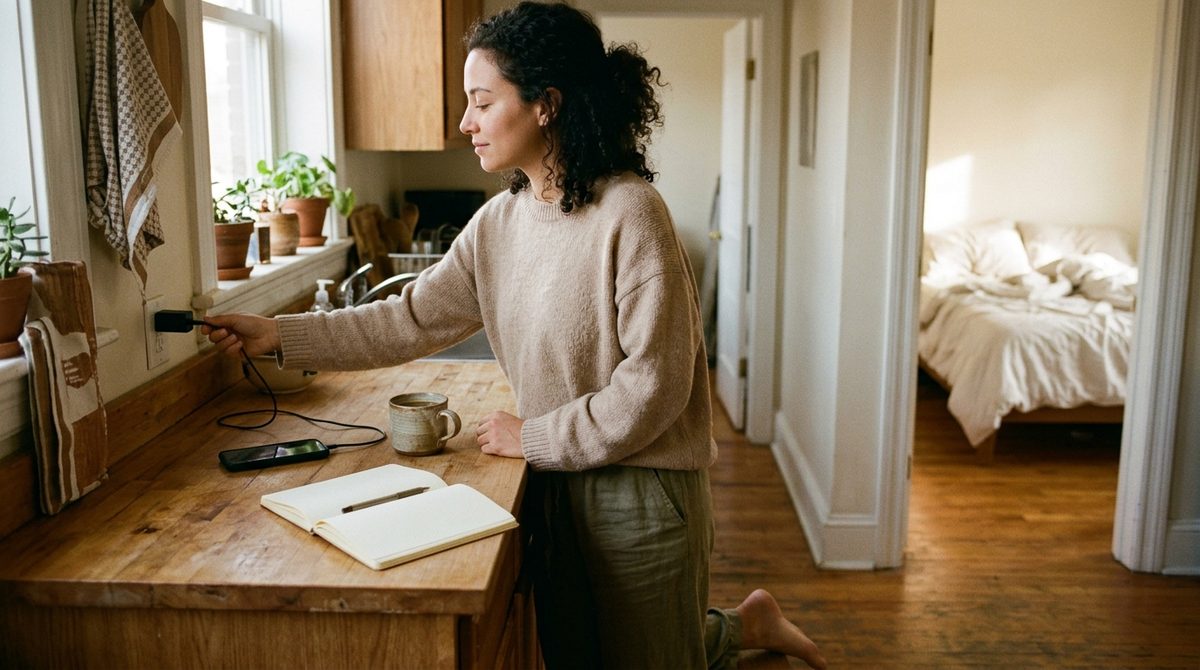
How to Stop Using Your Phone in the Morning
How to stop using your phone in the morning: move it out of the bedroom, block tempting apps until a set time, and plan a first hour you actually want.