Calorie Counting Without Logging: The Easiest Way to Track
Tired of food diaries? Learn calorie counting without logging — a photo-based, awareness-first routine that takes seconds and actually sticks long term.
If you have downloaded a food diary app, logged everything diligently for two weeks, and then quietly stopped — you are the normal one. Manual calorie logging fails for most people not because they lack willpower, but because the method demands too much: search a database, pick the right entry from twenty near-identical options, guess the grams, repeat three to six times a day, forever.
The easiest way to track calories is to stop treating tracking as accounting and start treating it as awareness. You do not need a perfect ledger of every bite. You need a fast, honest signal about what you are eating, delivered at the moment you eat it. Photo-based scanning — point your camera at the plate, get an estimate in seconds — makes that possible.
Why manual food logging collapses
Three failure modes kill almost every food diary:
- Friction. A single home-cooked dinner might mean logging six ingredients with weights. That is a minute or two of fiddly work per meal, and homemade or restaurant food often is not in the database at all.
- Database hunting. Search "chicken curry" and you get a wall of entries with wildly different numbers. Choosing feels arbitrary, and once the numbers feel arbitrary, motivation to keep entering them evaporates.
- Guilt spirals. Miss a day and the record is "ruined." Many people respond to one unlogged meal by abandoning the whole practice — the streak psychology that helps at first turns toxic the first time it breaks.
Notice that none of these is about the value of knowing your intake. They are all about the cost of the recording method.
Awareness over accounting
Here is the reframe: for most people, the benefit of calorie tracking is not the precise total. It is the feedback loop — seeing, in the moment, that the pasta is around 800 calories while the grain bowl is around 500, and letting that knowledge gently steer hundreds of future choices.
Accounting asks: "What was my exact total today?" Awareness asks: "Do I roughly know what I am eating, and is the trend heading where I want?" The second question is the one that changes behavior, and it can be answered with estimates. This matters because every method is an estimate anyway — manual logs and even nutrition labels carry real error margins, as we cover in our honest look at AI calorie accuracy.
How photo-based tracking changes the habit
Scanning a photo compresses the entire logging workflow into one gesture you already do — pointing your phone at food. With Calovia, you snap a photo of your meal (or pick one from your library) and the AI returns estimated calories, protein, carbs, fat, fiber, and sugar, plus a simple health score. No search, no dropdown menus, no weighing.
That changes the habit mechanics in three ways:
- The cost per meal drops to seconds, so the habit survives busy days, restaurants, and travel — exactly the situations where manual logging dies.
- Missed meals stop mattering. With an awareness mindset there is no ledger to ruin. Skipped a scan? Scan the next meal. The practice is resilient because it was never all-or-nothing.
- Feedback arrives before you eat, not after. A diary tells you at 10 p.m. what you did wrong. A scan tells you at 12:05 what you are about to do — while you can still adjust the portion or skip the extra side.
Your scans are saved to a local history on your phone, so you can flip back through the week and spot patterns — without maintaining a spreadsheet. (Your meal photos are sent to the AI only to analyze that meal, then discarded.)
Building a "scan and glance" routine
Here is a sustainable routine that takes under a minute a day in total:
- Scan before the first bite. Tie it to an existing cue — phone comes out, photo taken, done. Whole plate in frame, sides included.
- Glance at three things: the calorie ballpark, the protein number, and the health score. Ten seconds. Do not study; just register.
- Make at most one micro-adjustment. Maybe you leave a third of the rice, or swap the soda. Some meals, you adjust nothing — that is fine. Awareness is the win.
- Review your history once a week. Scroll your saved scans on Sunday and ask one question: what is the pattern? Heavy dinners? Low protein at breakfast? Pick one thing to nudge next week.
Who still needs strict logging
Honesty matters here: if you have a medical reason to know intake precisely — diabetes management, a medically supervised diet, or guidance from a dietitian — awareness-style estimates are not a substitute for the protocol your clinician gave you. App estimates are for general awareness, not medical advice. For everyone else, the best tracking method is simply the one you will still be using in six months, and for most people that is the one that takes five seconds.
FAQ
Can I really track calories without logging food manually?
Yes — photo-based scanning replaces database searches and portion entry with a single picture, giving you an instant estimate of calories and macros; you trade a little precision for a habit that takes seconds and actually lasts.
Why do most people quit calorie counting apps?
Because traditional logging is high-friction: every meal means database hunting and portion guessing, and one missed day feels like failure. When the recording cost outweighs the perceived benefit, the habit collapses — usually within a few weeks.
Is an awareness-based approach effective if the numbers are only estimates?
For general healthy-eating goals, yes: consistent rough estimates reviewed over time reveal the patterns that drive change, and all tracking methods are estimates to some degree. For medical conditions requiring precise intake, follow a professional's guidance instead.
Snap a photo of any meal — get calories and macros in seconds.
Calovia — Take a photo of a meal and Calovia estimates calories, protein, carbs, fat, and a simple health score — no manual logging, no searching a food database.
Download Caloviafree on the App StoreKeep reading
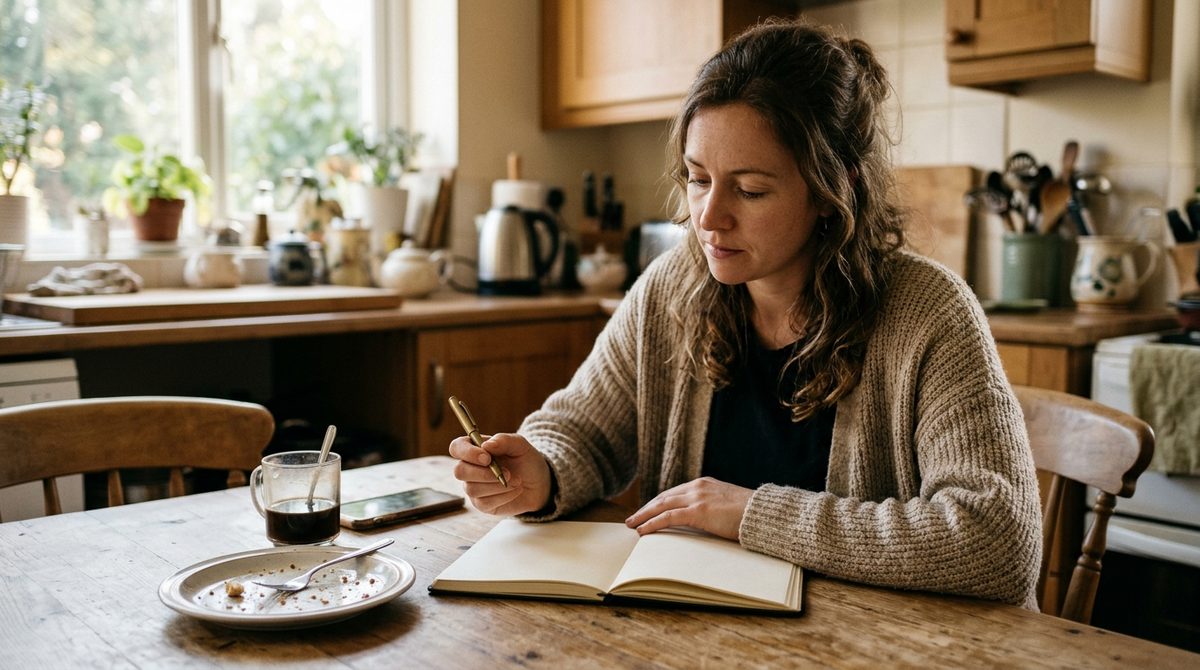
Food Diary With Photos: The Low-Effort Way to Track Meals
A food diary with photos takes seconds per meal and shows patterns a written log misses. Compare four methods and set one up that lasts beyond week two.

How Much Fiber Per Day Do You Need? Targets and Easy Wins
How much fiber per day you need by age and sex, what 30 grams looks like on a real plate, and how to add more without bloating. Simple, sourced, practical.
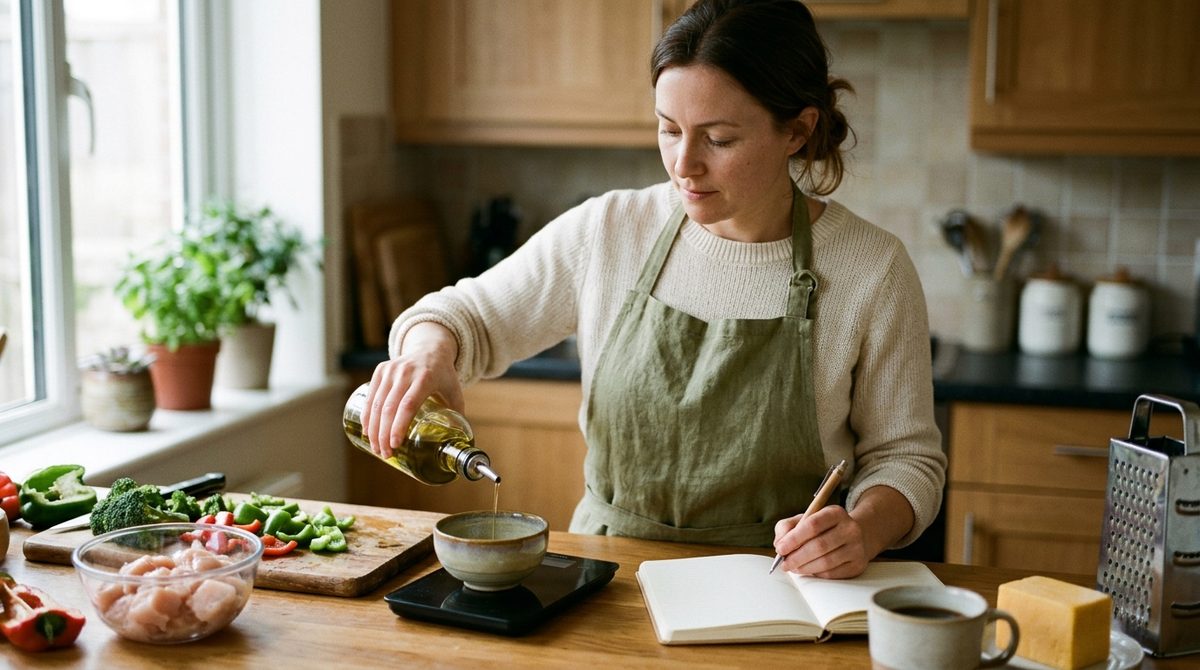
How to Count Calories in Homemade Food: The Recipe Method
How to count calories in homemade food: weigh raw ingredients, weigh the finished pot, divide by your portion. A worked chili example plus a faster photo option.