How to Stop Overeating: Habits That Actually Work
Overeating is usually about speed, distraction, and environment — not willpower. Here are practical, no-shame habits to eat to comfortable fullness and stop there.
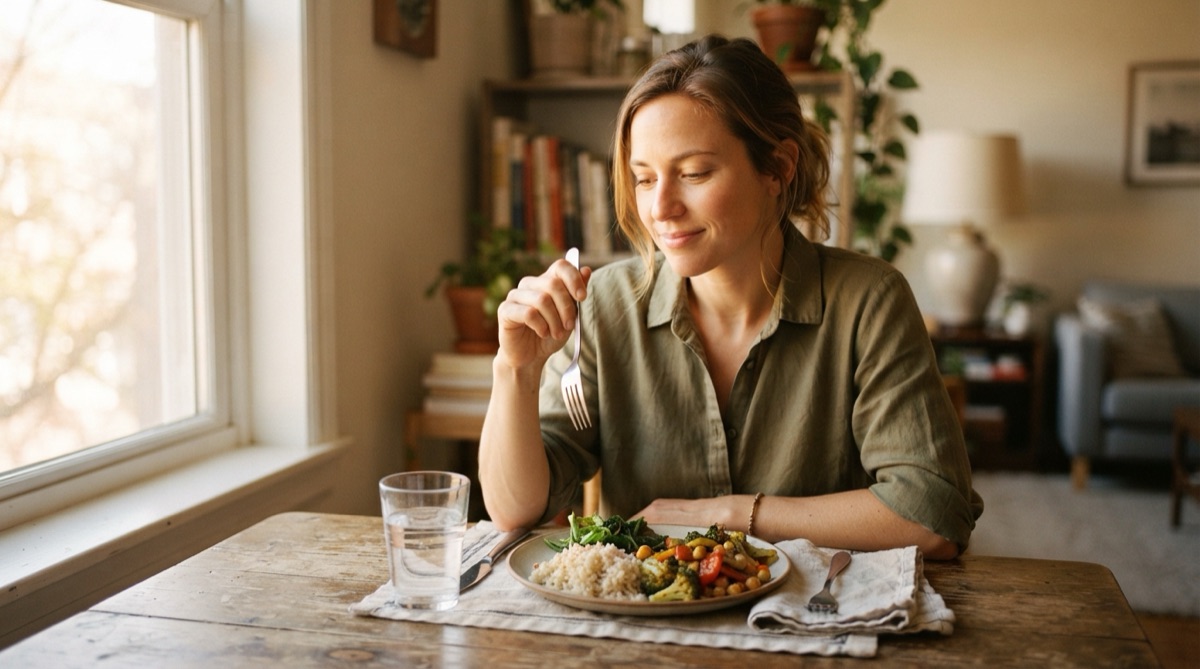
If you regularly finish a meal feeling uncomfortably stuffed and a little annoyed at yourself, the problem is almost certainly not willpower. Overeating is mostly mechanical — a product of how fast you eat, what is competing for your attention, and how much food is in front of you. Fix the mechanics and the "willpower" problem quietly disappears. This is a no-shame guide to eating until you are satisfied and stopping there.
The foundation is one piece of physiology worth memorizing: your stomach takes up to 20 minutes to tell your brain it is full. Eat faster than that signal travels and you will routinely blow past "satisfied" before your body can stop you. Nearly every tip below is really about giving that signal time to arrive.
Learn the fullness scale
Most people eat on autopilot until the plate is empty or they feel stuffed. A better gauge is a simple 0-to-10 hunger-fullness scale: 0 is ravenous, 5 is neutral, 10 is Thanksgiving-stuffed. The goal is to start eating around a 3 and stop around a 7 — comfortably satisfied, not full to bursting. Pause halfway through your meal and ask where you are on the scale. That single check-in, repeated over weeks, retrains you to notice fullness before it becomes discomfort.
Slow down — the highest-leverage habit
Because of that 20-minute delay, eating speed is the biggest single lever you have:
- Put your utensils down between bites. A physical reset that naturally paces you.
- Chew more thoroughly. It sounds trivial, but it genuinely slows the meal and improves how satisfied you feel.
- Take a two-minute pause partway through. Sip water, put your fork down, and let the fullness signal catch up before deciding whether you actually want the rest.
Kill the distractions
Eating in front of a screen is one of the most reliable ways to overeat. When your attention is on a show or your phone, you stop registering flavor, portion, and fullness — so you keep eating well past the point you would have stopped. Eating at a table without a screen lets you actually notice the food and your body's signals. If your phone is the hard part to put down at mealtimes, the same focus habits in getting things done without your phone apply directly to the dinner table.
Design your environment
Willpower loses to convenience every time, so make the easy choice the right one:
- Serve once, from the kitchen. Plate your food and leave the serving dishes off the table. Going back for seconds should require a decision, not just a reach.
- Use a smaller plate. A normal portion looks generous on a nine-inch plate and skimpy on a platter, and your eyes influence fullness more than you would think.
- Lead with volume and protein. Starting with the vegetables, soup, or protein means you fill up on the most satiating foods first — the logic behind high-volume, low-calorie eating.
- Keep trigger foods out of arm's reach. You will not mindlessly finish a bag of chips that is not on the couch with you.
Emotional hunger versus physical hunger
A lot of overeating is not about food at all — it is stress, boredom, or habit looking for an outlet. Physical hunger builds gradually and is satisfied by most foods; emotional hunger tends to hit suddenly, craves a specific comfort food, and is not quieted by a balanced meal. When the urge to eat appears, a five-second check — "am I actually hungry, or am I bored, stressed, or tired?" — creates just enough space to choose. If it is not physical hunger, a walk, a glass of water, or a short pause often dissolves it.
Where awareness helps
Building an accurate sense of what a normal, satisfying portion looks like takes repetition. Snapping a quick photo of your meals with Calovia for an instant calorie and portion estimate speeds that up — over a couple of weeks you start to see that the portion that leaves you at a comfortable 7 is plenty, without needing to weigh anything. This awareness-first approach, rather than rigid rules, is what makes the change stick, as we cover in tracking without logging every meal.
One important note: persistent overeating that feels out of control, is followed by shame or purging, or happens in secret can be a sign of binge eating disorder or another eating disorder. That is a medical issue, not a willpower failing, and it deserves real support — please reach out to a doctor or a qualified professional. The habits here are for everyday overeating, not a substitute for care.
FAQ
Why do I keep overeating even when I am not hungry?
Usually it is speed, distraction, environment, or emotion rather than true hunger. Eating fast outruns the roughly 20-minute fullness signal, screens numb your awareness, large portions invite finishing them, and stress or boredom trigger eating that has nothing to do with your stomach. Addressing those mechanics resolves most non-hungry eating.
How do I know when to stop eating?
Aim for "satisfied, not stuffed" — around a 7 on a 0-to-10 fullness scale, where you could comfortably do a light activity. Pausing partway through the meal to check in, and eating slowly enough for the fullness signal to arrive, makes that point far easier to catch before you overshoot.
Does eating slowly really help you eat less?
Yes. Because your brain takes up to 20 minutes to register fullness, slowing down lets that signal arrive before you overeat, so you naturally stop at a comfortable amount. Putting utensils down between bites, chewing thoroughly, and pausing mid-meal are simple, evidence-backed ways to do it.
Snap a photo of any meal — get calories and macros in seconds.
Calovia — Take a photo of a meal and Calovia estimates calories, protein, carbs, fat, and a simple health score — no manual logging, no searching a food database.
Download Caloviafree on the App StoreKeep reading

Food Diary With Photos: The Low-Effort Way to Track Meals
A food diary with photos takes seconds per meal and shows patterns a written log misses. Compare four methods and set one up that lasts beyond week two.

How Much Fiber Per Day Do You Need? Targets and Easy Wins
How much fiber per day you need by age and sex, what 30 grams looks like on a real plate, and how to add more without bloating. Simple, sourced, practical.
How to Count Calories in Homemade Food: The Recipe Method
How to count calories in homemade food: weigh raw ingredients, weigh the finished pot, divide by your portion. A worked chili example plus a faster photo option.